

The best long-term plan for expanding a website is to increase organic visitors. Search engine optimisation (SEO), though it may take some time, can yield significantly greater results than paid advertising, guest blogging, and practically any other online marketing strategy. The issue is that there are no quick fixes for understanding how to boost organic traffic.
You must comprehend how search engines operate and have a plan if you want to increase the amount of traffic they send to your website. Planning what kind of material to produce and monitoring the effectiveness of your pieces are great places to start. You shouldn’t ignore other, less well-known techniques either.
We’re going to walk you through 7 strategies in this article to assist you boost organic website traffic. Let’s start by talking about the portions where people also ask!
Table of Content
- 1. Target people also ask about sections
- 2. Refresh out-of-date content
- 3. Examine what is missing in your keyword list
- 4. Look for low-competition, quick-win keywords
- 5. Update the tags for your post titles and descriptions
- 6. Concentrate on quality link building
- 7. Use social media
- Boost the organic traffic to your website right now!
1. Target people also ask about sections
You might already be aware with Google’s search results include areas for questions as well. These are the answer boxes that follow the top result. They ask inquiries pertaining to the opening remark. Each question includes a brief response that was obtained from a website along with a link to that page:
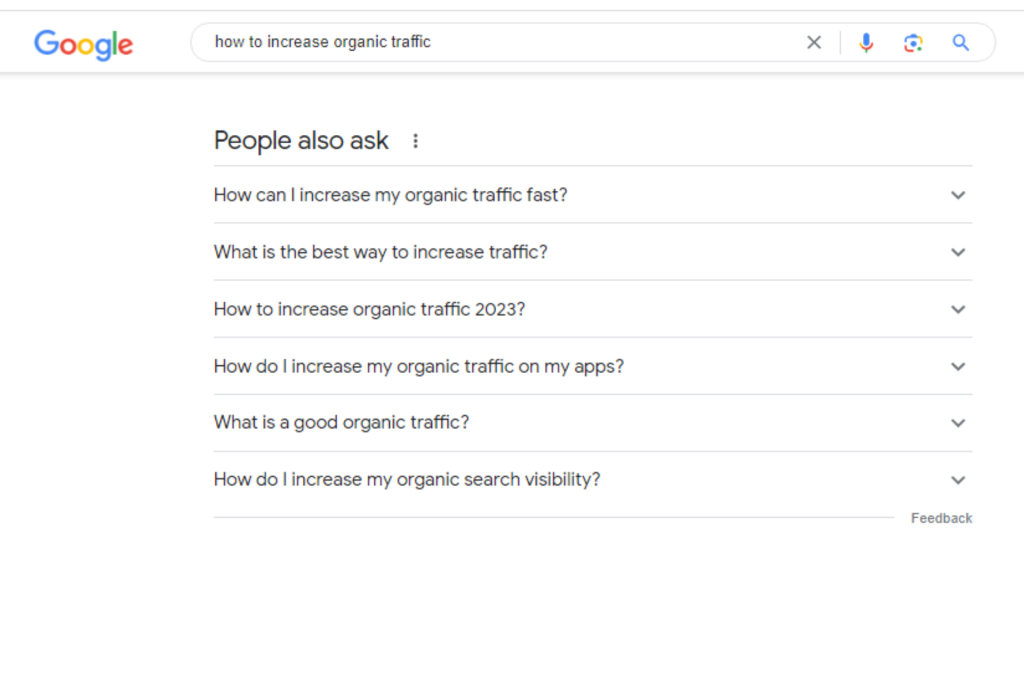
About 43% of all searches additionally include a question part [1]. The amount of engagement with these question and answer portions varies considerably. Only 3% of users occasionally interact with the People also ask area. That percentage rises to 13% for other types of queries. Approximately 40% of the encounters result in clicks.
The advantages of showing up in the People also ask section will be small if your material is already one of the top outcomes for a particular search. However, if you don’t appear among the top search results, you will still be able to attract organic visitors by showing up there.
You must optimise your content such that it offers succinct responses to the queries users are searching for if you want to improve your chances of appearing in this section. The Related searches section at the bottom of Google search results pages is a wonderful place to explore for answers to these queries.
2. Refresh out-of-date content
A lot of bloggers fail to update out-of-date content. Some of the stuff may age out over time as you continue to write more and more blog pieces. For instance, if we released a comparison of WordPress cloud hosting two years ago, the providers we would suggest may have changed significantly since then.
The same reasoning holds true for pretty much any post that offers recommendations or advise in detail. Even if it continues to receive traffic over time, it may reach a point where users stop referring to it as a resource since it is no longer up to date.
According to our experience, you should review your material library in its entirety at least once a year. Make a note of the articles you believe to be out-of-date, paying particular attention to those that mention specific years, product reviews and comparisons, listicles, and other items of a similar nature.
Once you have that list, give the most popular postings first priority. Those are your golden eggs, and you want to keep them as educational as you can to keep your audience interested. Make that the information is still (a) correct and (b) relevant by reading through each post. Update the post, make any necessary modifications, and make your content useful. That,s it!
3. Look for low-competition, quick-win keywords
Most people choose either high-volume searches or middle-of-the-road possibilities when analysing keywords. That is, terms with a respectable amount of traffic (i.e., hundreds of searches per month) and a reasonable amount of competition. It can be quite easy to rank for moderately competitive queries with well-structured articles, depending on your domain authority and backlinks.
Low-competition keywords with modest search volumes are, nevertheless, frequently ignored. These would be terms with 50–150 monthly searches each.
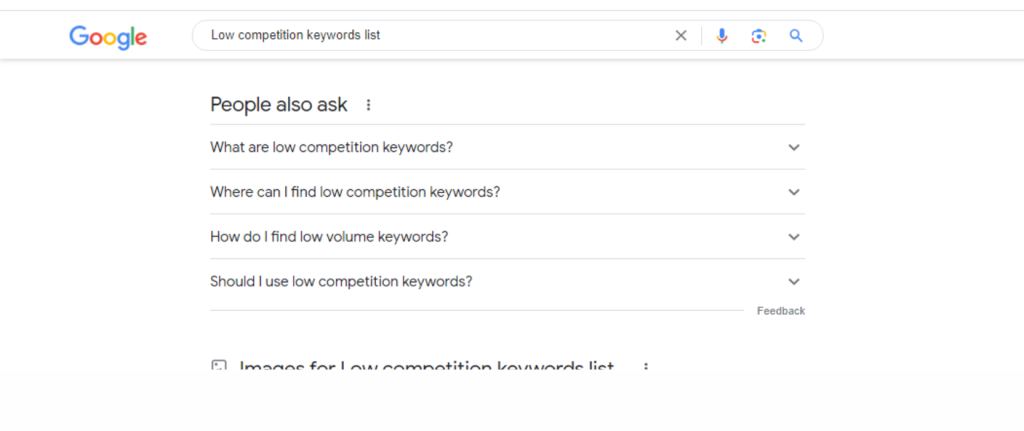
Using tools like Google Keyword Planner, Moz, and Answer the Public you may find out how popular a given keyword is. Using Keyword Planner, you may rank keywords from lowest to highest based on their average monthly searches.
Low-competition keywords should, by definition, be simple to rank for with well structured and thoroughly researched content. However, because creating that content costs additional work, which must be evaluated against the benefit (possible traffic), most individuals overlook these keywords.
Targeting these kinds of keywords can be a good approach for a new website to gain modest increases in traffic. You should choose keywords that you can combine together for the greatest results. This allows you to target various choices with a single post.
4. Examine what is missing in your keyword list
The idea of a keyword gap is straightforward. The keywords that your rivals are focusing on but you aren’t make up the “gap.” A list of prospective topics that users may be searching for but for which they aren’t finding any content from you is produced when branded keywords are excluded.
Not only is closing that gap a terrific strategy to boost website traffic, but it also ups your competitiveness. Additionally, looking into that gap can enable you to find content ideas you might otherwise overlook.
You’ll need access to a keyword research tool like Ahrefs or SE Ranking to analyse these gaps. These can be pretty pricey, but if you’re on a tight budget, you can get by with using a free trial (at least with SE Ranking).
If you have access to SE Ranking, you may enter the domains you want to compare into the Competitive Research feature on the dashboard.
5. Update the tags for your post titles and descriptions
It makes sense to keep track of the performance of posts you write with particular keywords in mind. The number of clicks a post receives in the search engine results pages (SERPs) is one of the most important markers of its effectiveness.
You may already be aware that the top SERP results receive the majority of clicks, with the first three results receiving 75% of all clicks [2].
As a result, your first priority when it comes to SEO should be to attempt and get posts to appear on the first page of results. That ought to be sufficient to at least receive a few clicks. We advise changing the post’s title and meta description to raise your ranking.
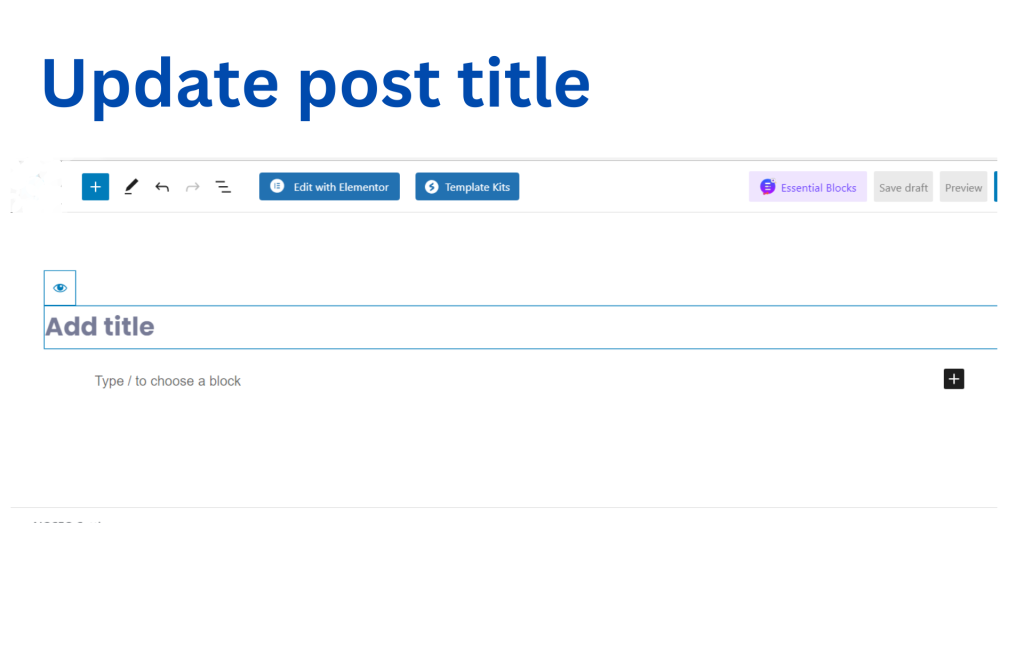
Simply told, the success of your postings is heavily influenced by search rankings, and their titles and meta descriptions can make or break them. A blog’s click-through rate (CTR) should rise as a result of people being more willing to read titles that are catchy.
We advise using Google Search Console if you’re not sure how to track click-throughs for your WordPress website. The average CTR for the pages on your site may be seen by going to the Performance tab in your Search Console dashboard:
6. Concentrate on Quality Link Building
Link building is essential for enhancing the authority and trustworthiness of your website in the eyes of search engines. Aim to gain trustworthy backlinks from websites in your niche. Effective strategies for constructing relevant backlinks naturally include guest posting, producing useful content that others want to link to, and participating in community outreach.

7. Use social media
Social media sites can be effective allies in boosting website traffic from natural sources. To attract a larger audience, consistently share your material on numerous social media platforms. Engage with your fans and motivate them to share your content to increase the organic reach of your brand.

Boost the organic traffic to your website right now!
Learning how to boost organic traffic to a website is not a secret. It all boils down to conducting the research, selecting the subjects for your articles, and maintaining a regular posting schedule. A successful content strategy will eventually pay off and result in consistent organic traffic. Or to put it another way, you’ll have a crowd.
We advise taking into account the following tactics if you’re wondering how to enhance organic traffic:
- Target People ask in portions as well.
- Identify any keyword gaps.
- Update stale content.
- Look for low-competition, quick-win keywords.
- Your post names and description tags should be updated.
Conclusion
The gradual process of increasing organic traffic to your website with SEO calls for commitment, tolerance, and constant work. Beginners can make substantial progress towards increasing their website’s exposure, bringing in more organic traffic, and finally attaining online success by comprehending the fundamental principles of SEO and putting the tactics described in this tutorial into practise. Keep in mind that SEO is an area that is continually changing, so keeping up with the most recent trends and algorithm updates is essential to maintaining and increasing your organic traffic over time. Good Luck!
Join us as you begin your Shopify journey
We are e-commerce specialists and Shopify Partners. Get in touch with us if you need assistance with Shopify, need a whole website built, or have any other general questions.