

The way artists and makers interact with customers from around the world has been revolutionised by the online marketplace Etsy. Etsy, which was founded in 2005, offers independent sellers a forum to display their distinctive handmade, vintage, and craft supply items. Etsy has developed into a go-to location for consumers looking for unique products and personalised gifts because to its user-friendly interface and a flourishing community of creative businesses.
If you are a gifted maker or collector wishing to convert your hobby into a successful business, Etsy gives you the chance to connect with a large audience without having to worry about creating a separate e-commerce website. We’ll lead you through selling on Etsy in 7 simple steps in this blog.
Table of Content
- What is Etsy?
- How to sell on Etsy
- How much does selling on Etsy cost?
- How to sell more on Etsy for greater business success
- Conclusion
- Start a business on Etsy
What is Etsy?
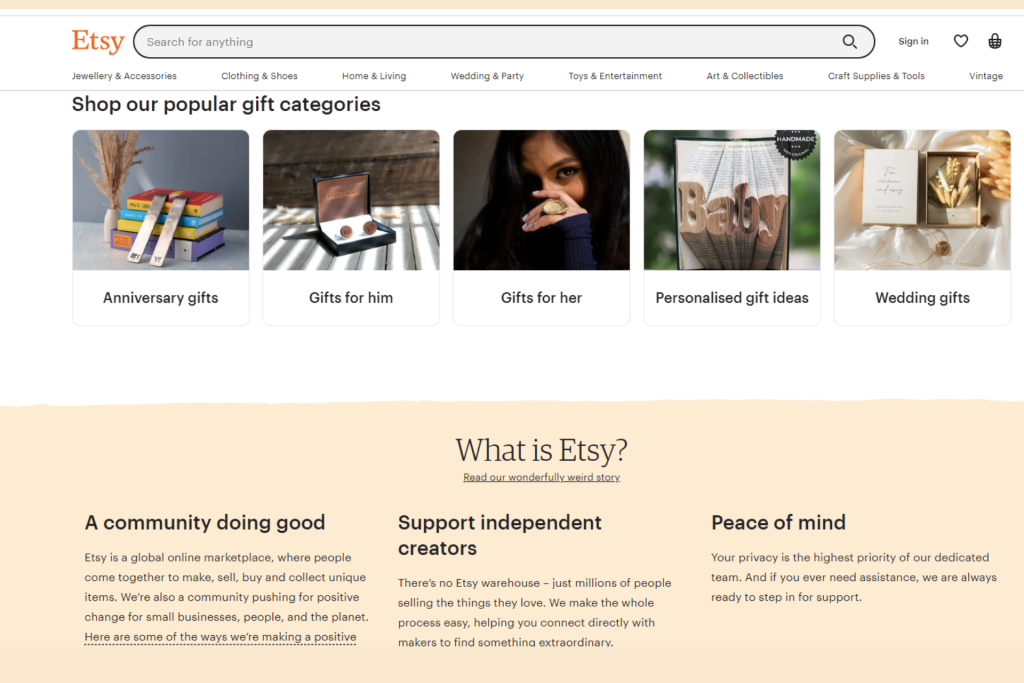
An online marketplace called Etsy allows users to buy and sell handmade, antique, and craft products. It is a worldwide market with more than 76 million active consumers and sellers in more than 150 nations.
The distinctive and inventive things on Etsy are well known. On Etsy, you can buy anything from handcrafted jewellery and clothes to vintage furniture and artwork. You can find something absolutely unique thanks to the platform’s ability for sellers to offer custom orders.
To support independent artists and makers, check out Etsy. You are directly assisting the individual who developed the item when you purchase it on Etsy. As a result, small enterprises continue to thrive.
You can use Etsy for the following things, for example:
- Find unique and creative presents for loved ones.
- Purchase apparel, jewellery, and accessories that are handmade or vintage.
- Find original furniture and home decor.
- Buy materials for your own artistic endeavours.
- Encourage independent makers and artists
How to sell on Etsy
Step 1: Signup and set up for business
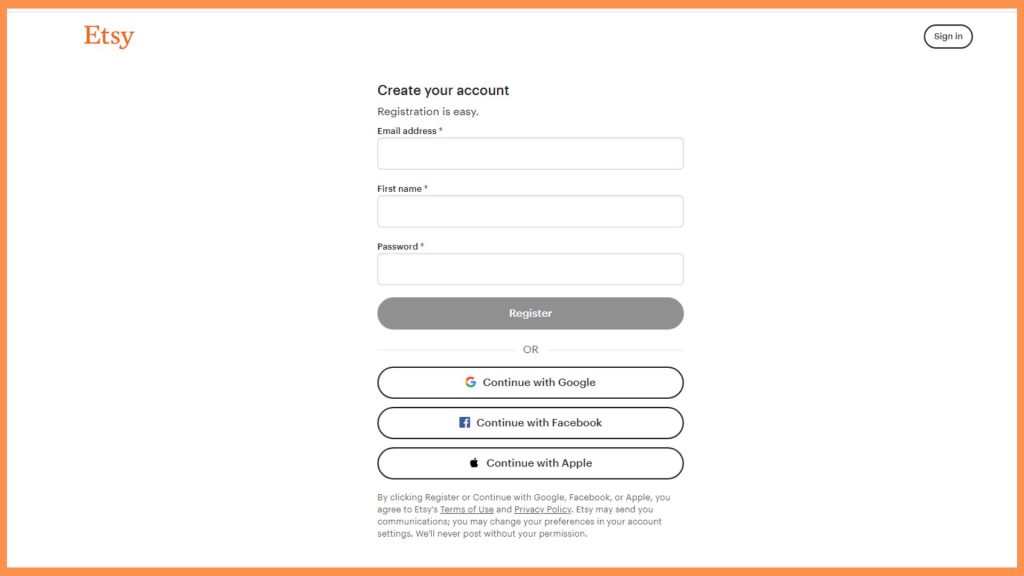
On Etsy, getting started is easy. Register for an account at www.etsy.com. Pick a unique store name that accurately describes your products or business. You will be directed through the shop setup process after creating your account, where you can upload a personal image, a banner for your shop, and a compelling shop description. In order to increase the visibility of your shop in Etsy’s search results, be sure to include pertinent keywords in your description.
Step 2: Curate your product listings
For attracting potential customers, high-quality product photos and carefully written descriptions are essential. Take crisp, well-lit pictures of your products from different angles, emphasising their distinctive traits. Make your product descriptions thorough and interesting by emphasising the materials used, the size, and any customization possibilities. Pricing your goods competitively is crucial, so look up comparable items on Etsy to figure out what to charge.
Step 3: Provide exceptional customer service
Step 4: Understand Etsy’s SEO
When selling on Etsy, search engine optimisation (SEO) is essential for exposing your goods to the proper customers. Make use of relevant keywords you’ve discovered in your product titles, descriptions, and tags to help customers identify products similar to yours. When ranking search results on Etsy, the search algorithm takes these variables into account, so optimising your listings can have a big impact on how visible your shop is.
Step 5: Market Your Store
Don’t rely only on Etsy to bring customers to your store, even while it facilitates the connection between consumers and sellers. Make use of social media sites to promote your goods, interact with potential customers, and create a brand community. Join relevant forums and groups on Etsy to meet other vendors and customers.
Step 6: Use Etsy’s Promotional Resources
Etsy provides a number of advertising methods to aid in boosting the exposure of your business. You may build targeted advertising with Etsy advertising that show up in search results and on pertinent product pages. To maximise your advertising’ efficacy, set a daily budget that you are comfortable with and periodically check their success.
Step 7: Making your Etsy storefront unique
Customising your new storefront—the information prospective consumers will see when visiting your store profile—is the last step in starting an Etsy shop. How to do it:
- Upload a banner image and profile picture. Put the logo of your company, yourself, or your products front and centre on your Etsy store.
- Build your user profile. Put a face to the goods you’re selling on the marketplace by introducing yourself as the shop manager. Give potential clients reassurance that there is a live person behind the screen.
- Inform people about your new business. Do you sell anything? Why? How did your shop get started? Describe yourself briefly and explain why people should buy your stuff when they visit your new Etsy business.
- Your store’s policies on a file. It is crucial to consider delivery, payment alternatives, privacy, exchange, and return policies. Clarify your store’s policies for customers to avoid any misunderstandings.
How much does selling on Etsy cost?
Since there are no setup fees for selling on Etsy, getting set up and running is simple. As soon as you begin listing items for sale, charges start to accrue.
Let’s examine the main Etsy selling costs.
List prices
The most typical Etsy seller fees are listing fees. Regardless of whether a listing generates a sale or not, sellers are charged 20 for each new listing they add to their store.
Listings on Etsy’s marketplace are typically displayed for four months (or until the item has been sold). You will be charged the same 20 after the four months are up if auto-renew is chosen.
Fees for transactions
sold something on Etsy? The marketplace will charge you a transaction fee of 6.5% for arranging the sale. In addition, each listing’s postage, shipping, and gift-wrapping costs are included in that.
On each listing, sellers in the UK, France, Italy, Spain, and Turkey must also pay a regulatory operating fee. It is based on the overall revenue, which includes the cost of the product and any shipping costs the customer was charged.
Each nation’s transaction costs are as follows:
- UK: 0.25 percent
- Europe: 0.4%
- Italy: 0.25%
- Spain: 0.4%
- 1.1% in Turkey
Fees for accepting payments
When you created your Etsy store, which may be used to accept payments, you will have submitted your bank information.
Store owners can also use Etsy Payments, which offers customers the option of paying using PayPal, Apple Pay, Google Pay, and Klarna, among other payment methods. Payment processing charges apply if you enable Etsy Payments.
Before their Etsy sales are sent to their bank accounts, sellers in some nations—including Mexico, the Philippines, and South Africa—will need to achieve minimum payment levels.
Costs for currency conversion
Etsy only accepts US dollars for payment. Despite the fact that you can sell goods in other currencies, all fees for using Etsy will be billed in USD. Prior to the transfer, the market will convert your money into the currency of your bank account, but take aware that this exchange rate may not always reflect market value.
When transacting with Etsy in a currency other than the US dollar, a 2.5% currency conversion fee may be charged.
Offsite Ad costs
The marketplace also provides advertising, in addition to allowing you to have a product listing that is optimised for the Etsy search engine and reaches potential buyers.
Sellers have the option to participate in Offsite Ads, which display their products on Etsy’s own marketing and promotional channels. Without having an account on those platforms, business owners can have their products show in Etsy’s Facebook, Google, and display ads.
How to sell more on Etsy for greater business success
Here are some tips for selling on Etsy that will help you expand your company.
Create a reliable brand
Your brand will be recognisable and stick out in Etsy search results if it has a strong visual identity. Even though first impressions matter, you don’t have to go all out with an expensive, polished design. It only needs to have a logo and brand colours. For whatever visual materials you require to go with your branding, you can utilise Canva as a template tool and the free logo maker on Shopify.
Improve your store
Popular search phrases and the products that appear in the search results are connected by Etsy’s algorithm.
It will be easier for Etsy to comprehend what your products are and when to display them in the search results if you use pertinent keywords in your product titles and descriptions. Shoppers are more likely to see your products and consider buying them if you rank higher in search results.
Here are some methods for ensuring that your Etsy SEO is up to par:
- When creating your product listings, include pertinent tags and keywords.
- When describing a product, pick the appropriate qualities.
- Gather and present customer reviews on your product pages.
- Add new content frequently to keep your storefront current.
- Increase the amount of information on your About Me page.
- It will be simpler for Etsy to comprehend what you’re offering and ensure that the proper people see your products if you provide more details about your brand and utilise more pertinent keywords.
Offering competitive pricing
On Etsy, setting prices for your goods can be challenging. The majority of the goods are handcrafted, and a lot of time and attention is put into each one. Your prices must reflect the worth of the item and the going rate in the market in order to drive sales.
Customers will question why they should pay more for your product if a rival is offering it for half the price.
The goal of competitive pricing isn’t to guarantee that you are constantly offering the best deal. If the cost of producing your products is high, that could have a negative impact on your bottom line. After all, you want to turn a good profit.
To price your things profitably, remember to:
- Rivals for research: Take a look at the prices other brands are charging for comparable goods. To find out what other value they are providing, go beyond the price. Is shipping complimentary? Is there a sale going on?
- Reduced by one cent: If the majority of brands are charging $25 for the identical item, you can differentiate yourself by charging $24.99. This is a common price strategy that creates the impression that the purchase is less expensive, even if it is only by one cent.
- Add value somewhere else: If you can’t justify lowering your prices to match those of your rivals, think about adding value in other ways. This could be done by offering free shipping, unique packaging, a free gift with every transaction, or a special discount for repeat customers.
Encourage feedback and suggestions
Through the inclusion of additional keywords and social proof, Etsy reviews make your listings stand out. The more testimonials you have, the more assured potential clients will be in their decision to buy from you.
Encourage clients to post testimonials, suggestions, and even images of their goods (which Etsy displays on the product page). After a consumer makes a purchase, you may email them a follow-up question and entice them with a coupon code for their subsequent purchase.
Additional Tips
Here are some other tips for beginning an Etsy business quickly:
- Decide on a specialty. This will enable you to concentrate your marketing efforts and draw customers who are enthusiastic about your particular offerings.
- In your titles and descriptions, use keywords. This will improve the visibility of your listings in search results.
- Run advertisements. You can reach more customers by using one of the many advertising options available on Etsy.
- Use social media to advertise your store. Post links to your ad listings on websites like Facebook, Twitter, and Instagram.
- Make connections with other vendors. Participate in online forums or craft fairs to meet other vendors and gain insight into their processes.
Conclusion
Etsy gives creative business owners a fantastic opportunity to transform their hobbies into successful ventures. You may successfully open a shop on Etsy by following these 7 simple steps, and you’ll be able to connect with a huge global market of customers who value and support one-of-a-kind, handmade, and vintage things. Be persistent and patient as you develop your brand and expand your shop, keeping in mind that success on Etsy requires time and commitment. Happy marketing!
Start a business on Etsy
Etsy is an option for selling your handcrafted products, just as Shopify. You’ll find a market for your intricate necklaces, crocheted animals, or recycled furniture. Setup is cost-free. Open a store and create an account. After that, put your goods up for sale.
Create a positive customer experience above all else to encourage repeat business. You can succeed at selling on Etsy if you put in the effort. So why are you still waiting? Start right away!
Join us as you begin your Shopify journey
We are e-commerce specialists and Shopify Partners. Get in touch with us if you need assistance with Shopify, need a whole website built, or have any other general questions.