

Running a Shopify store is about more than adding products and waiting for customers to buy. You need to attract the right audience, build trust, create a smooth shopping experience, and encourage visitors to complete their purchases. Even if your store has great products, customers may leave without buying if they cannot find what they need, do not trust your brand, or find the checkout process difficult.
This is where Shopify apps can help. The right apps give you useful tools to improve product pages, recover abandoned carts, send marketing messages, recommend related products, and encourage customers to return. Instead of handling every task manually, you can automate important parts of your sales process and focus more on growing your business.
In this guide, we will explore some of the top Shopify apps that can help you sell more, improve customer experience, and make your store more effective.
Table of Content
- 1. Klaviyo: Turn Customer Interest Into Sales
- 2. WizeSaaS EZ Quick Buy and Quick View: Make Purchasing Easier
- 3. Judge.me: Build Trust With Customer Reviews
- 4. Shopify Search and Discovery: Help Customers Find the Right Products
- 5. UpCart: Increase Order Value With Cart Upsells
- 6. WizeSaaS Pretty Sales Popup: Use Social Proof to Encourage Purchases
- 7. Omnisend: Automate Email and SMS Marketing
- 8. Shopify Messaging: Promote Products Through Email
- 9. LoyaltyLion: Encourage Repeat Purchases
- 10. TinyIMG: Improve Store Speed and SEO
- How to Choose the Right Shopify Apps for Your Store
- Final Thoughts
1. Klaviyo: Turn Customer Interest Into Sales
Getting visitors to your Shopify store is only the first step. You also need a way to stay connected with people who browse your products but do not purchase immediately. Email marketing is one way to build that connection, and Klaviyo offers tools to help you do it.
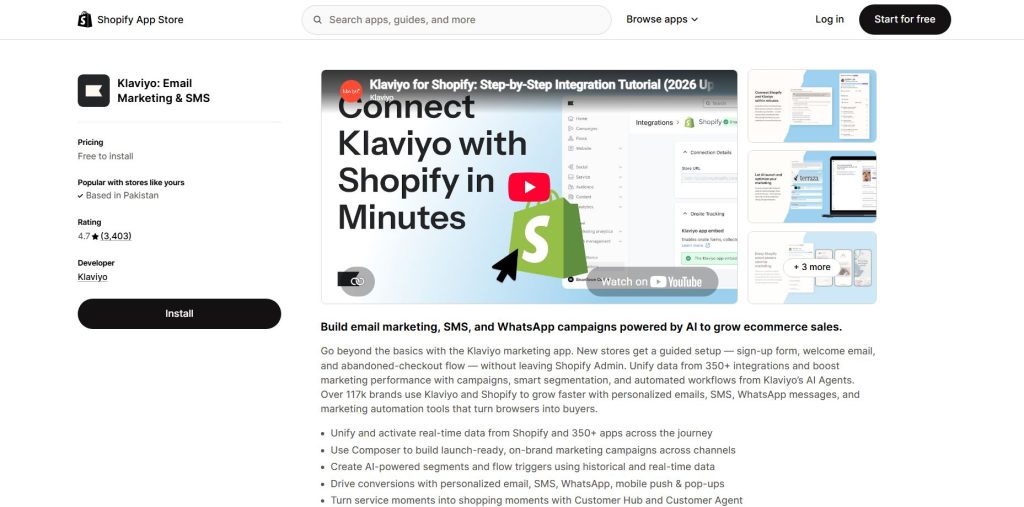
Klaviyo:Email Marketing and SMS helps merchants create email and SMS campaigns, organize customers into groups, and automate messages based on shopping behavior. For example, you can send a welcome email to new subscribers, recommend products based on previous purchases, or remind customers about items they left in their carts. These automated messages can help bring interested shoppers back to your store.
Another useful feature is customer segmentation. You can create different campaigns for first-time buyers, regular customers, and people who have not purchased for a while. This makes your marketing more relevant because customers receive messages that better match their interests.
Klaviyo is particularly useful for stores that want to build long-term customer relationships instead of depending only on new visitors. Its available pricing and usage limits should be reviewed before choosing a plan.
2. WizeSaaS EZ Quick Buy and Quick View: Make Purchasing Easier
Customers may lose interest if they have to open several product pages or follow too many steps before making a purchase. A shorter buying process can make shopping easier, especially for stores with large product collections.
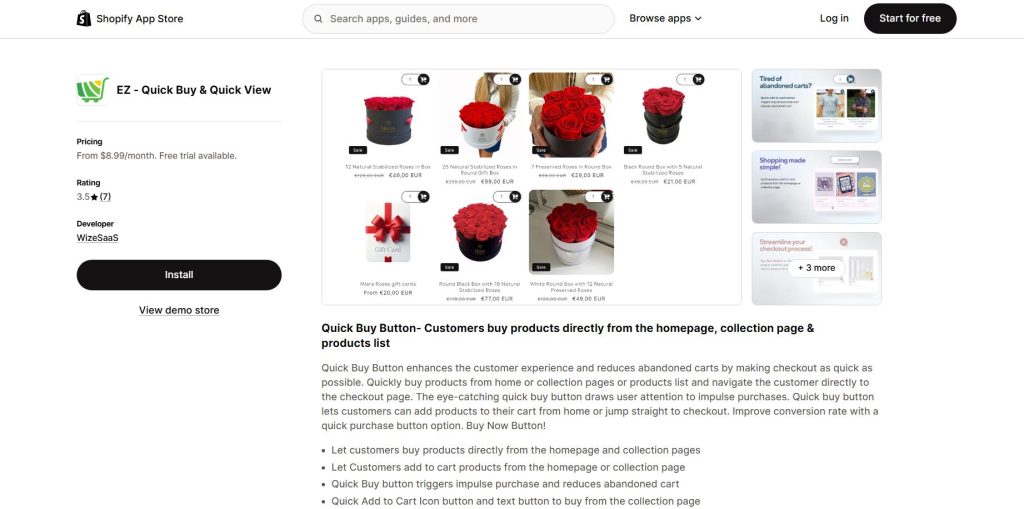
WizeSaaS EZ Quick Buy and Quick View helps merchants add quick purchasing options to their storefronts. Customers can access product information, add products to their carts from supported store pages, or use quick-buy options without following the traditional shopping journey for every item.
For example, imagine a clothing store displaying shirts in different colors on a collection page. A shopper who already knows what they want may prefer to add a shirt directly from that page instead of opening its product page, reviewing the details, and returning to the collection.
The app offers quick-buy functionality and quick-view options that can help reduce unnecessary navigation. Depending on the selected button and store configuration, customers can add products to their carts or move toward checkout more directly.
This app can be useful for fashion stores, accessory brands, home decor businesses, and other stores where customers browse several products before deciding what to buy. A simpler purchasing journey can reduce friction and make it easier for interested shoppers to complete their order
3. Judge.me: Build Trust With Customer Reviews
Customers often look for reviews before buying from an online store, especially when they are unfamiliar with the brand. Product descriptions and professional images are important, but feedback from previous buyers can provide additional confidence.
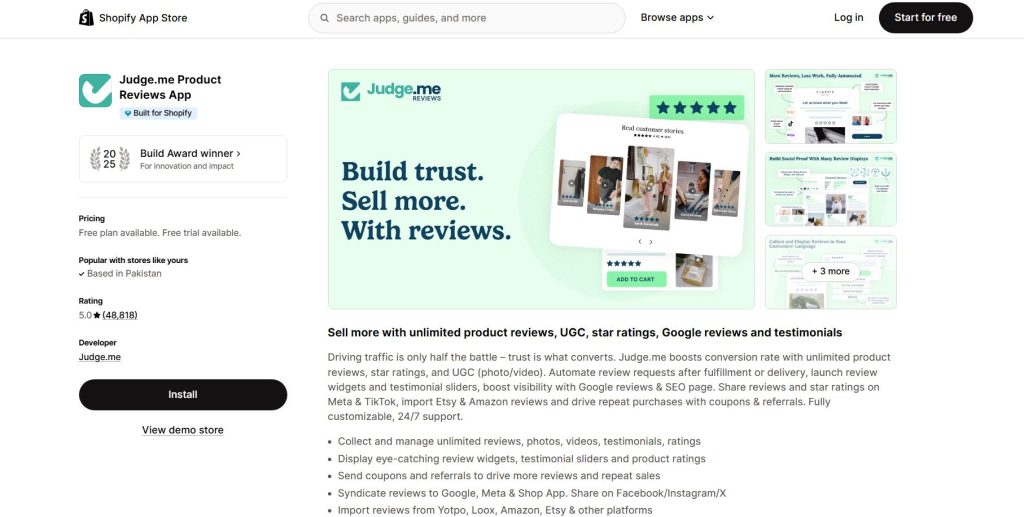
Judge.me :Product Reviews helps Shopify merchants collect and display product reviews, star ratings, customer photos, videos, and testimonials. The app can also automate review requests after purchases, making it easier to gather feedback without contacting every customer manually.
For example, a skincare store can display customer reviews about a moisturizer’s texture, packaging, and ease of use. A clothing store can showcase customer photos that help shoppers understand how a product looks when worn. These details can answer common questions and help customers make informed decisions.
Judge.me also offers review widgets and testimonial displays that can be added to different areas of a store. Merchants can use these features to highlight genuine customer experiences on product pages.
The app offers a free plan, with additional features available through paid plans. Its review tools can help new visitors feel more confident about purchasing, while customer feedback can also show store owners where products or services need improvement.
4. Shopify Search and Discovery: Help Customers Find the Right Products
A store may have hundreds of excellent products, but customers will struggle to buy them if they cannot find the right items. Poor navigation and irrelevant search results can make shoppers leave before discovering products that match their needs.
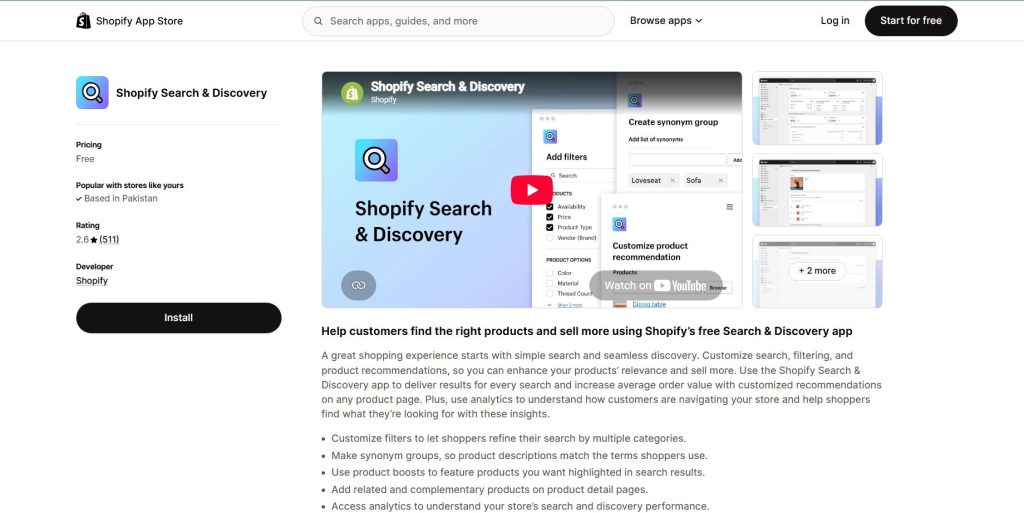
Shopify Serach and Discovery is a free Shopify app that helps merchants improve product search, collection filters, and product recommendations.
With search filters, customers can narrow their options by relevant product details. For example, a shoe store can help shoppers find products by size, color, or other available attributes. A home decor store can organize products so customers can browse different styles or categories more easily.
The app also supports search customization, synonyms, and product recommendations. Synonyms can help customers find relevant products even when they use different words to describe an item. Product recommendations can introduce shoppers to related or complementary products while they browse.
For example, someone shopping for a desk may also be interested in a desk lamp or an organizer. Showing relevant recommendations can help customers discover more items and may increase the value of their orders.
This app is a useful starting point for stores that want to improve product discovery without immediately paying for another search solution.
5. UpCart: Increase Order Value With Cart Upsells
Sometimes customers are ready to purchase, but they may be interested in adding another item if it is relevant and useful. Cart upselling and cross-selling give merchants a way to present these options during the buying process.
UpCart: Cart Drawer and Cart Upsell helps merchants create a customizable slide-out cart with features such as in-cart upsells, cross-sells, add-ons, and reward bars.
For example, a customer buying a skincare cleanser might also be interested in a matching moisturizer. A store can recommend the moisturizer in the cart, allowing the customer to consider both products before checking out.
Another useful approach is offering a free-shipping reward when customers reach a certain order value. If a shopper is close to the minimum amount, a clear progress indicator may encourage them to add another suitable product.
However, recommendations should be relevant to the items customers are already buying. Showing unrelated products or too many offers can distract shoppers and make the process frustrating.
UpCart is particularly useful for businesses that want to improve the cart experience while encouraging customers to purchase complementary products.
6. WizeSaaS Pretty Sales Popup: Use Social Proof to Encourage Purchases
When visitors arrive at an unfamiliar store, they may wonder whether other people are buying its products. Social proof can help answer that question by highlighting genuine customer activity and making the store feel more established.
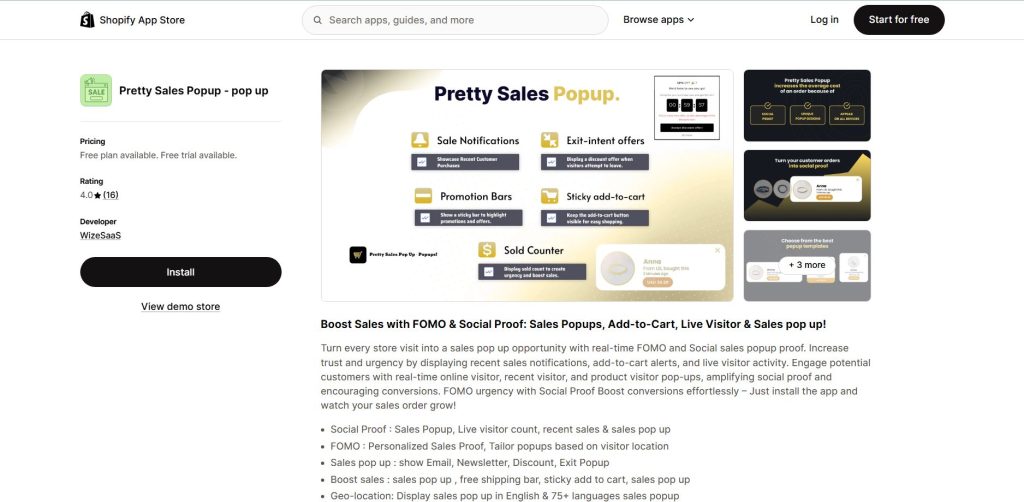
WiezSaas Pretty Sales Popup offers sales notifications, add-to-cart alerts, and live visitor activity features that merchants can use to display social proof on their storefronts.
For example, a store can show a notification about a recent purchase when the information is based on genuine store activity. Seeing that other shoppers are interested in a product may encourage visitors to explore it further.
The app can also help merchants create a sense of activity around their products. This may be especially useful for stores that want to highlight popular items or make their shopping experience more engaging.
However, social proof works best when notifications are accurate and presented in a way that does not interrupt browsing. Fake purchase alerts or misleading scarcity messages can damage customer trust.
Pretty Sales Popup is worth considering for merchants who want to highlight real shopping activity and encourage visitors to take the next step.
7. Omnisend: Automate Email and SMS Marketing
Marketing becomes difficult when you have to contact every subscriber manually. As your customer list grows, you need a reliable way to send timely messages, promote products, and follow up with shoppers.
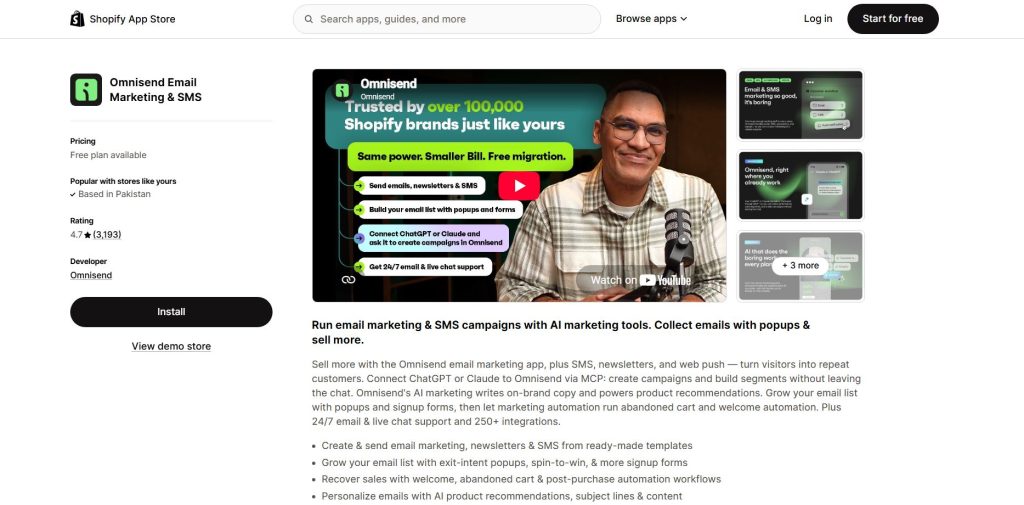
Omnisend Email Marketing and SMS provides email marketing, SMS campaigns, signup forms, and automation features for ecommerce businesses.
For example, you can welcome new subscribers with an introduction to your brand, send promotional emails when a new collection launches, or follow up with customers who have shown interest in your products. Automated messages can also help you reconnect with shoppers who have abandoned their carts.
Omnisend allows merchants to create campaigns and workflows that support different stages of the customer journey. This means you can communicate with people who are discovering your store as well as customers who have already made a purchase.
You can also use email marketing to share useful product information, announce seasonal offers, and introduce products that match customer interests.
Omnisend is a good option for merchants who want to manage several email and SMS marketing activities through one platform. Compare its current plans and messaging limits before deciding whether it fits your budget.
8. Shopify Messaging: Promote Products Through Email
Small businesses do not always need a complicated marketing platform to begin communicating with customers. Sometimes, a straightforward tool for sending promotions and updates is enough to get started.
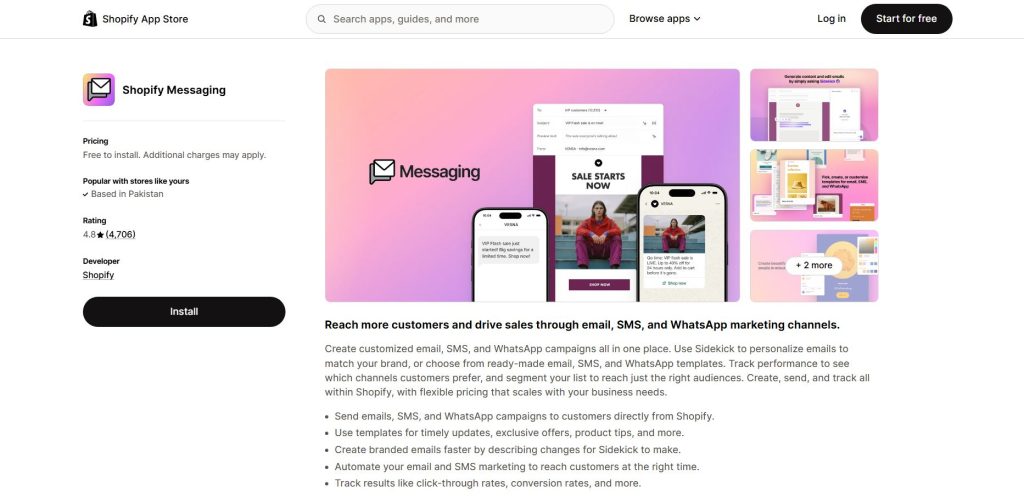
Shopify Messaging helps merchants create email marketing campaigns and connect with customers through Shopify.
You can use it to announce new products, promote seasonal collections, share special offers, and keep subscribers informed about your business. For example, a clothing store can send an email introducing its winter collection and direct customers to the relevant product pages.
Email campaigns can also help you reach existing customers who may be interested in new products or upcoming promotions. Instead of relying entirely on social media algorithms or paid advertisements, you have another channel for communicating with people who have subscribed to your updates.
For merchants who want to keep their marketing workflow close to Shopify, Shopify Messaging is worth exploring. Review the current features and eligibility requirements to see whether it meets your needs.
9. LoyaltyLion: Encourage Repeat Purchases
Making a first sale is important, but building a group of returning customers can help create more consistent revenue over time. Customers who have a positive shopping experience may be willing to purchase again, especially when a loyalty program gives them an additional reason to return.
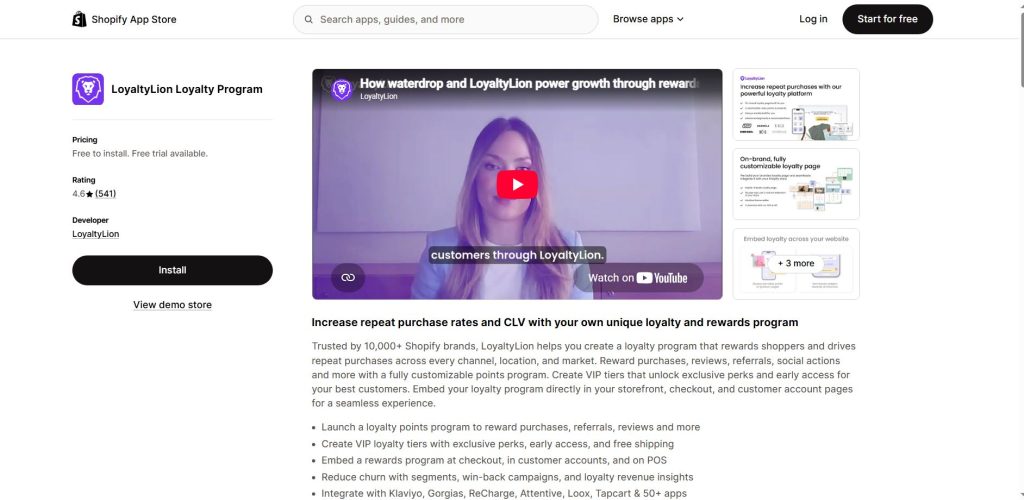
LoyaltyLion helps ecommerce businesses create loyalty and rewards programs that encourage customer engagement and repeat purchases.
Depending on the program setup, customers may earn points for purchases and other qualifying activities. Those points can then be exchanged for available rewards, discounts, or other benefits.
For example, a beauty store might reward customers for buying products, creating an account, or referring a friend. Customers can collect points over time and use them toward future purchases, giving them an incentive to continue shopping with the brand.
Loyalty programs can also help merchants build stronger customer relationships by recognizing repeat buyers and encouraging ongoing engagement.
However, rewards should be valuable enough to interest customers while remaining affordable for the business. A well-planned loyalty program should support profitable sales rather than relying on discounts for every purchase.
LoyaltyLion is a useful option for stores with an established customer base that want to encourage more repeat orders and build long-term loyalty.
10. TinyIMG: Improve Store Speed and SEO
Customers need to find your store before they can buy from it. At the same time, slow-loading pages can make browsing frustrating and discourage visitors from exploring products.
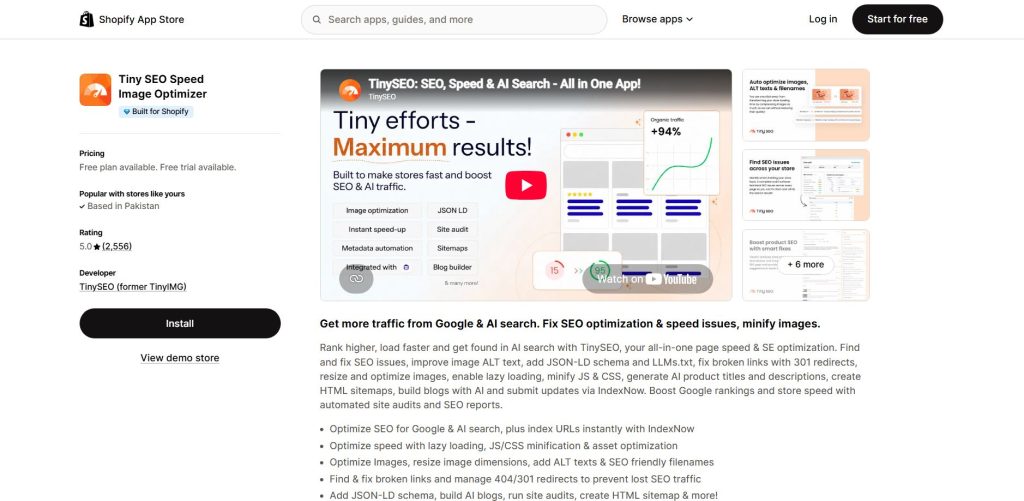
TinyIMG SEO and Image Optimization offers tools for image optimization and search engine optimization, helping merchants improve important parts of their storefront.
Product images are essential for online shopping, but large image files can affect page-loading performance. Image optimization can help reduce file sizes while maintaining suitable visual quality. This is particularly important for stores with many product images, such as fashion, jewelry, and home decor businesses.
SEO tools can also help merchants identify opportunities to improve image alt text, metadata, and other store content, depending on the features available in their selected plan.
For example, a furniture store can use descriptive product titles and relevant image alt text to make its pages clearer for search engines and visitors. Better organization and optimized images can support a smoother shopping experience.
SEO does not guarantee immediate traffic or sales, but improving your store’s technical quality and product information can support long-term growth. TinyIMG is worth considering if image optimization and search visibility are priorities for your business
How to Choose the Right Shopify Apps for Your Store
Not every Shopify store needs all ten apps. The best selection depends on your business goals, current challenges, product range, and budget. Installing too many apps at once can increase costs, create overlapping features, and sometimes affect storefront performance.
Start by identifying the biggest problem in your sales process. If customers struggle to find products, consider improving search and discovery. If visitors add items to their carts but do not complete purchases, review your checkout experience and consider suitable recovery tools. If your store receives orders but customers rarely return, email marketing and loyalty programs may be more useful.
Before installing an app, check its features, pricing, reviews, compatibility, and support options. Test the app on your theme and review how it behaves on mobile devices. It is also important to check whether your existing Shopify theme or another installed app already provides the same functionality.
Once an app is installed, measure its results. Track relevant metrics such as conversion rate, average order value, repeat purchase rate, email revenue, and cart abandonment. Compare performance before and after installation to understand whether the app is making a useful difference.
Remember that an app is a tool, not a complete sales strategy. Strong product descriptions, clear pricing, high-quality images, reliable shipping, and responsive customer support remain essential to earning customer trust.
Final Thoughts
Growing a Shopify store requires more than attracting visitors. You need to give people a reason to trust your brand, help them find the products they want, make purchasing simple, and encourage them to return. The right apps can support each of these goals by improving different parts of the customer journey.
Klaviyo and Omnisend can help you build customer relationships through email marketing, while Judge.me can display reviews that support buyer confidence. Shopify Search and Discovery makes products easier to find, and tools such as UpCart can introduce relevant add-ons during checkout. WizeSaaS EZ Quick Buy and Quick View and Pretty Sales Popup provide additional options for simplifying purchases and highlighting genuine store activity.
Start with the apps that solve your biggest challenges rather than installing everything at once. Monitor their performance, remove tools that do not provide enough value, and continue improving your store based on customer behavior. With the right combination of tools and a strong shopping experience, you can create better opportunities for more sales and sustainable business growth.
Join us as you begin your Shopify journey
We are e-commerce specialists and Shopify Partners. Get in touch with us if you need assistance with Shopify, need a whole website built, or have any other general questions.