

You’ve probably heard business owners discuss their achievements. Are there any of them that you can remember saying anything like, “I don’t know how it happened, but hey, here I am”? Of course not—successful businesspeople don’t think that way.
To inform their decisions and advance their companies, business leaders create quantifiable targets. Here’s how you can use this goal-setting approach to support your strategic planning in your own small firm.
Table of Content
- What is a business goal?
- What are SMART goals for businesses?
- Types of business goals
- Tips for creating successful business goals
- Long-term vs short-term objectives
- Examples of business goals
- Conclusion
What is a business goal?
A business objective is a standard that you establish as a business owner or leader to use as a yardstick to gauge your success. A financial objective for a business could be something like meeting a revenue target for the year. It could be an industry-specific objective like gaining market share. It may be an aim for brand reputation, like winning customer happiness awards.
Business objectives and goals have some minor differences. A business aim typically has a longer time horizon and is more general than a business objective. In order to achieve a larger business goal of increasing market share by 50%, a sales team can pursue the business target of getting a product into a particular retail store.
What are SMART goals for businesses?
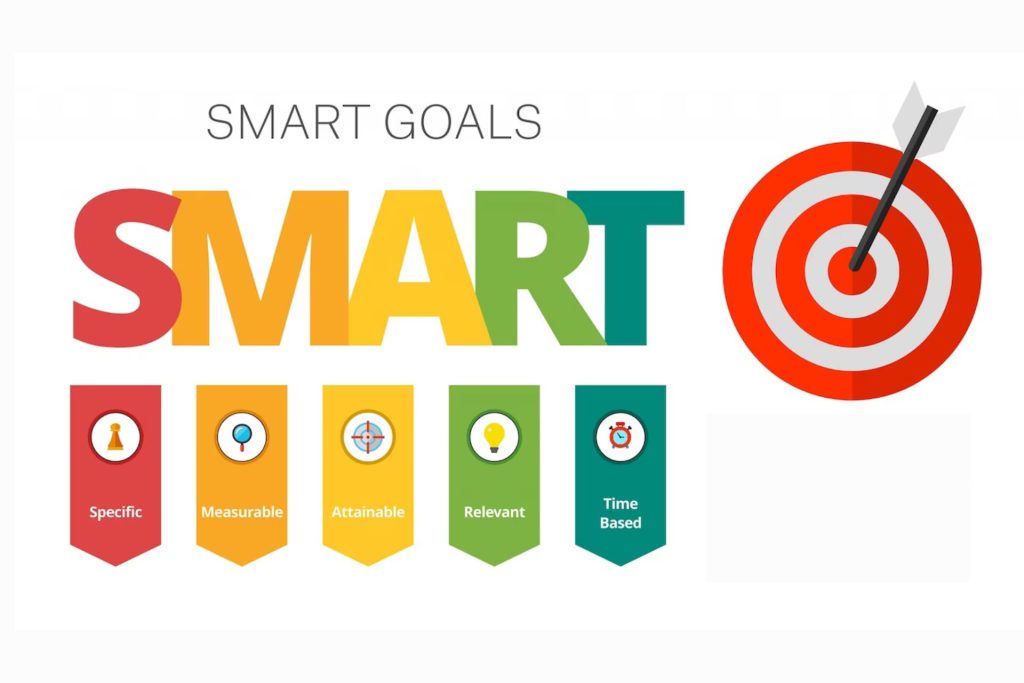
The abbreviation “SMART” stands for “specific, measurable, achievable, relevant, and time-based.” Business objectives are more likely to result in actual advancement when they meet these requirements. For instance, a business can declare that its financial objective is to raise profits, but this objective is neither particular, quantifiable, nor time-based. The objective suddenly satisfies those requirements if the corporation clarifies the statement to express a short-term goal to increase revenue by 15% in the following quarter. Businesses that set SMART targets concentrate on measurable outcomes that promote their company strategies.
Types of business goals
There are a lot of different types of business goals, but a few of the most popular ones are as follows:
1. Financial goals
These objectives concentrate on raising sales, cutting expenses, or boosting profitability. For instance, a financial objective can be to boost revenues by 10% the following year or lower operating expenses by 5%.
2. Customer goals
These objectives are centred on raising customer retention rates, enhancing customer satisfaction levels, or gaining new clients. For instance, a customer goal can be to gain 10,000 new clients in the following year or raise customer satisfaction levels by 20%.
3. Operational goals
These targets concentrate on enhancing effectiveness, output, or calibre. An operational objective might be to, for instance, cut the time it takes to process a client order by 15% or increase the precision of product shipments by 99%.
4. Growth goals
These objectives concentrate on entering new markets, releasing new products or services, or gaining market share. For instance, a growth objective can be to introduce a new product line or geographic market within the following year or six months.
5. Reputational goals
These objectives concentrate on enhancing the company’s reputation, brand recognition, or social responsibility. A reputational objective might be, for instance, to become carbon neutral within the next five years or to be acknowledged as a top employer by a reputable industry newspaper.
Depending on the industry, size, and strategic goals of the organisation, the precise types of business goals that are defined will change. All business objectives, however, must be SMART (specific, measurable, achievable, relevant, and time-bound). This will make sure that they are measurable, attainable, and unambiguous.
Tips for creating successful business goals
The following tips can help you achieve and accomplish great business goals:
- Establish your goals first. What do you hope to accomplish with your company? Do you wish to broaden your consumer base, boost sales, or enter new markets? You can start creating precise goals after you are aware of what you want to accomplish.
- Ensure that your objectives are SMART. SMART goals are time-bound, relevant, specified, measurable, and achievable. This means that your objectives should be specific, measurable, and attainable. They should also have a completion date and be pertinent to the overall goals of your company.
- Set goals with your team in mind. Goals are more likely to be accomplished when your team is invested in their creation. Ask your team members for their opinions on the kind of objectives they believe are doable and feasible.
- Organise your objectives into manageable steps. Large objectives may appear intimidating and overwhelming. Divide things into smaller, more manageable steps to make them easier to handle. This will make it simpler to monitor your development and maintain motivation.
- Follow your development. It’s critical to monitor your progress towards your objectives so that you may change as necessary. This will assist you in staying motivated and preventing discouragement.
- Celebrate your accomplishments. Spend some time celebrating when you succeed in a goal. You’ll be inspired to keep going forward as a result.
Long-term vs short-term objectives
Short-term and long-term company objectives are frequently combined by entrepreneurs and corporate strategists. In order to guide an organisation in the right path and enhance its future status, both short-term and long-term goals are necessary. Every form of goal offers a benchmark that a business may use to gauge development.
Long-term objectives
Usually, a long-term goal is more than a year away. It could be used to define what the business considers to be a sustainable state for years or perhaps decades to come. Long-term objective examples include:
- Within two years, switch to a totally online company strategy.
- Increasing shareholder value by 10% annually on average
- In response to a revised company mission statement, enter a new industry.
Short-term objectives
Short-term objectives are often those that a corporation hopes to accomplish in a year or less. For instance, a lot of businesses set quarterly targets for increasing revenue and profits. Some people set weekly sales targets. Short-term objective examples include:
- Increase the profit margins by 15% for the upcoming quarter.
- For the year, have a 90% staff retention rate.
- By the end of the month, get a licence to operate in a new state.
Examples of business goals
Here are some examples of business goals:
- Sales will rise by 10% in the next quarter.
- In the following year, increase the consumer base by 20%.
- In the following two years, expand into new markets.
- In the upcoming six months, introduce a fresh good or service.
- In the coming month, raise customer satisfaction by 5%.
- In the upcoming year, cut expenses by 10%.
These are bjust a few examples, and the specific goals you set will differ based on the company you work for. The advice in this blog will help you develop and accomplish successful business goals, which will enable you to advance your company.
Conclusion
Setting and accomplishing effective business goals calls for rigorous preparation, effort, and a dedication to ongoing development. By taking the actions indicated in this article, from creating precise goals to commemorating accomplishments, you can build a structure that propels your company to success. Keep in mind that defining goals is a continuous process. Review and modify your goals frequently to keep up with the changes in your industry. Your company may soar to new heights and experience the success you’ve dreamed of with the appropriate mindset and a well-executed strategy. Start establishing those goals and watch your company grow!
FAQs
Q1. Why are business goals important?
Business goals offer an exact plan for the expansion and success of an organisation. They support decision-making, progress tracking, team alignment, and staff motivation towards a common goal.
Q2. How do I build effective business goals?
To make wise business decisions:
- Determine the objective and vision of your business.
- Establish goals that are precise and explicit.
- Make sure they are quantifiable and measurable.
- Make sure they’re doable and sensible.
- Align objectives with the values and long-term plans of your firm.
- Define a precise timetable for completing each objective.
4. How many goals should I set for the business that I run?
Although there isn’t a defined quantity, it is advised to concentrate on a small number of crucial objectives to prevent distributing resources too thinly. A typical strategy is to have three to five primary goals each quarter or year.
5. How do short-term and long-term business goals different from one another?
Short-term targets are those that can be completed right away and with relative ease. They typically have a completion period of a few months to a year. Long-term objectives are more comprehensive ones that often cover a number of years and contribute to the overall development and sustainability of the company.
Join us as you begin your Shopify journey
We are e-commerce specialists and Shopify Partners. Get in touch with us if you need assistance with Shopify, need a whole website built, or have any other general questions.