

Running a successful Shopify store is not just about attracting more visitors or increasing the number of orders. It is also about helping customers discover more products they love and encouraging them to spend a little more with each purchase. When customers buy additional products, choose product bundles, or take advantage of special offers, your store can generate more revenue from the same number of orders. This is where Average Order Value (AOV) becomes important.
The right Shopify apps can help you improve AOV by recommending related products, offering exclusive discounts, creating product bundles, and showing personalized deals at the right time. Instead of making customers search for additional products themselves, these apps make it easier for them to find useful items that match their needs.
In this guide, we will explore some of the best Shopify apps to increase average order value, explain their key features, and help you choose the right tools for your store
Table of Content
- What Is Average Order Value (AOV)?
- Why Should You Focus on Increasing AOV?
- 1. Selleasy: Increase Sales With Upselling and Cross-Selling
- 2. Frequently Bought Together: Create Product Combinations
- 3. Bundler: Product Bundles and Volume Discounts
- 4. Kaching Bundles: Encourage Customers to Buy More
- 5. Upcart: Improve the Cart Experience With Upsell Offers
- 6. Essential Free Shipping Upsell: Motivate Customers With Free Shipping
- 7. BOGOS: Encourage Larger Purchases With Free Gifts
- 8. Shopify Search & Discovery: Recommend Relevant Products
- How to Choose the Right Shopify App for Your Store
- Best Practices for Increasing Average Order Value
- Final Thoughts
What Is Average Order Value (AOV)?
Average Order Value is the average amount customers spend each time they place an order in your Shopify store. It helps store owners understand how much revenue they generate from each transaction and identify opportunities to increase sales without depending entirely on new customers.
You can calculate AOV by dividing your total sales revenue by the number of orders during a specific period.
For example: If your Shopify store generates $5,000 in sales from 100 orders, your average order value is $50. If you increase it to $60 while maintaining the same number of orders, your revenue becomes $6,000. That is an additional $1,000 in sales without increasing the number of orders.
This is why improving AOV is an important part of an ecommerce growth strategy. Even small improvements can make a difference over time, especially when your store receives regular orders.
Why Should You Focus on Increasing AOV?
Increasing average order value allows you to get more value from your existing customers. Rather than spending all your resources attracting new visitors, you can improve the shopping experience and encourage customers to add relevant products to their carts.
For example, a customer purchasing a skincare cleanser might also need a moisturizer or sunscreen. Similarly, someone buying a laptop may be interested in a laptop bag, wireless mouse, or keyboard. Showing these complementary products at the right moment can make the shopping experience more convenient while increasing the total order value.
A higher AOV can also help you make better use of your marketing budget, promote products that customers might otherwise overlook, and create attractive offers that encourage larger purchases. However, the goal should always be to offer genuine value rather than pressure customers into buying unnecessary items.
1. Selleasy: Increase Sales With Upselling and Cross-Selling
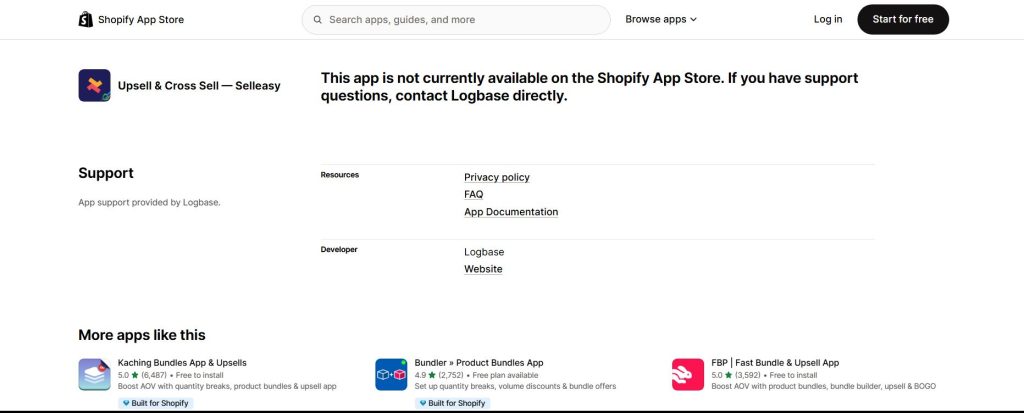
Selleasy is a useful option for Shopify merchants who want to recommend additional products throughout the shopping journey. It helps store owners create upsell and cross-sell offers on product pages, in the cart, and at other suitable points in the buying process.
Upselling encourages customers to choose a higher-value product or a better version of an item, while cross-selling suggests complementary products that go well with their original selection. Both strategies can help increase the amount customers spend in a single order.
For example, if a customer is purchasing a coffee machine, your store can recommend coffee beans, reusable filters, or a milk frother. These suggestions make sense because they support the customer’s original purchase. Selleasy can help you present similar recommendations without requiring shoppers to browse through your entire catalog.
The app also offers different upsell and cross-sell display options, allowing merchants to present relevant offers in a way that fits their store. By focusing on products that genuinely complement one another, you can encourage customers to discover more items while keeping the shopping experience simple.
Best for:
Shopify stores that want to increase order value through relevant product recommendations
2. Frequently Bought Together: Create Product Combinations
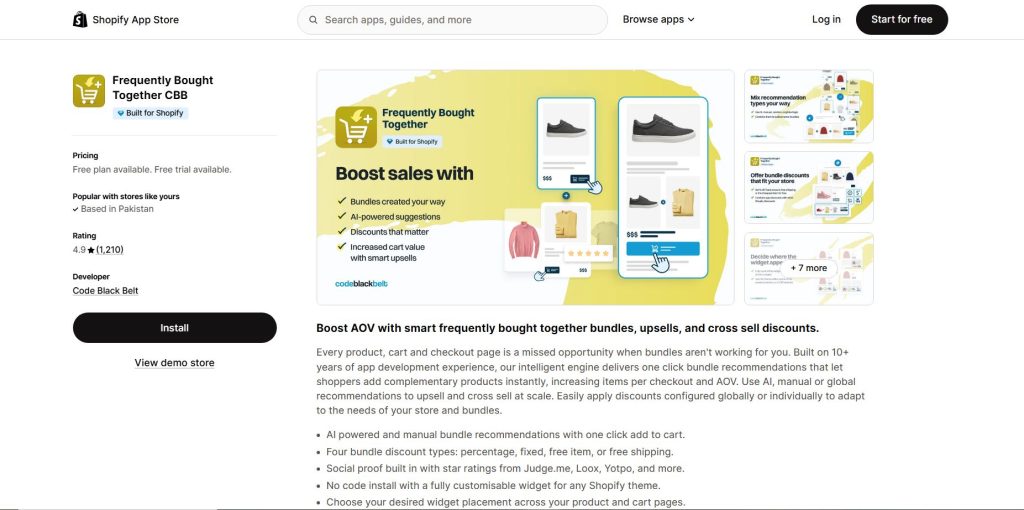
Frequently Bought Together helps Shopify merchants recommend products that customers commonly purchase together. Inspired by familiar product recommendation experiences in ecommerce, it allows shoppers to discover complementary items and add multiple products to their carts more conveniently.
Product combinations are particularly useful for stores selling electronics, beauty products, clothing, accessories, and home essentials. Instead of purchasing only one item, customers can explore a ready-made combination that meets more of their needs.
For example, an online beauty store could display a cleanser, toner, and moisturizer together. A customer who originally planned to purchase only the cleanser might decide to buy the complete skincare routine when the products are presented as a useful combination.
The app supports product recommendations and bundle-style offers, helping merchants encourage customers to purchase multiple items in one transaction. You can also select suitable product combinations based on your inventory and customer buying patterns.
The key is to recommend products that naturally work together. When customers understand the benefits of purchasing the suggested items, they have a stronger reason to increase their cart total.
Best for:
Stores that sell complementary products and want to increase multi-item purchases
3. Bundler: Product Bundles and Volume Discounts
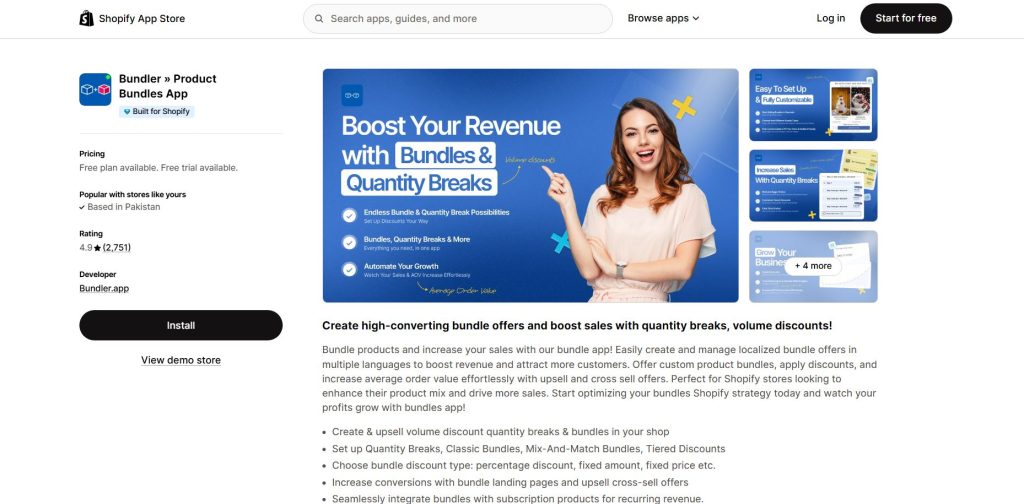
Product bundles are an effective way to increase average order value because they encourage customers to purchase several items together. Bundler helps Shopify merchants create different types of bundle offers, including product combinations, quantity discounts, and buy-one-get-one promotions, depending on the selected setup.
These offers give customers a reason to purchase more than one item while making the value of the offer clear. Instead of buying products individually, shoppers can choose a bundle that provides a convenient combination or a discount for purchasing multiple units.
For example, a clothing store could offer a bundle containing a T-shirt, trousers, and a cap. A skincare business might create a complete daily routine, while a store selling candles could offer a discount when customers purchase three fragrances instead of one.
Bundler can help merchants present these offers directly in their stores and encourage customers to explore additional products. Quantity-based discounts can be especially helpful for consumable products, household essentials, and items customers regularly use.
However, discounts should be planned carefully. Before creating an offer, consider product costs and profit margins to ensure that the additional sales remain profitable.
Best for:
Stores that want to sell multiple products together or encourage customers to buy larger quantities.
4. Kaching Bundles: Encourage Customers to Buy More
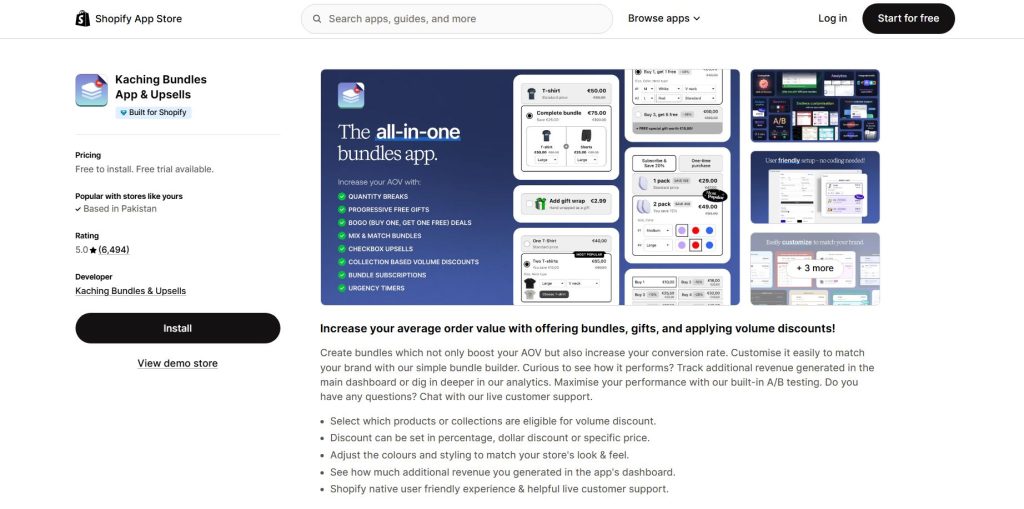
Kaching Bundles is another option for Shopify merchants looking to increase AOV through product bundles and quantity-based offers. It helps stores present deals that encourage customers to purchase more units or select a combination of related products.
One of the main advantages of bundle offers is that they give customers a clear reason to increase their spending. When shoppers can see how buying additional items benefits them, they may be more willing to add extra products to their orders.
For example, a supplement-free wellness store selling water bottles could offer one bottle at the regular price, two bottles at a lower price per item, and three bottles at an even better value. A clothing store could also offer quantity discounts on basic T-shirts in different colors.
Kaching Bundles can help merchants display these types of offers on product pages and make the available purchasing options easier to understand. This approach works particularly well for products that customers use regularly or like to purchase in multiple styles, sizes, or colors.
Before launching a bundle, make sure the discount is attractive to customers without reducing your profit too much. The best offers balance customer value with business profitability.
Best for:
Stores that want to encourage bulk purchases, quantity breaks, and higher-value product combinations.
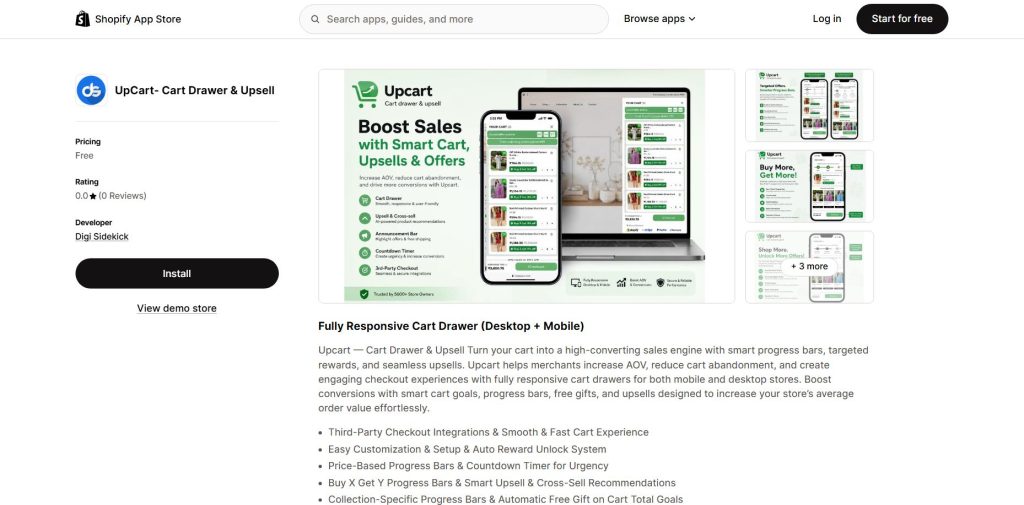
5. Upcart: Improve the Cart Experience With Upsell Offers
Upcart allows merchants to customize the cart experience to suit their branding and selling strategy. Its purpose is not simply to display more offers, but to make the cart more useful and encourage customers to complete their purchases.
The shopping cart is an important opportunity to increase average order value because customers have already shown interest in purchasing. Upcart helps Shopify merchants customize the cart experience with features such as product recommendations, promotional messages, rewards, and cart progress indicators.
A well-designed cart can encourage shoppers to add one more relevant product before proceeding to checkout. For example, if a customer adds a pair of shoes to their cart, your store could suggest matching socks or shoe-care products. These small additions can increase the order total without requiring customers to start a new shopping journey.
Cart progress indicators can also help merchants communicate incentives such as free shipping or a special reward after customers reach a spending target. When shoppers can easily see how close they are to receiving a benefit, they may consider adding another useful item.
For the best results, keep recommendations relevant and avoid overwhelming customers with too many promotional messages.
Best for:
Shopify stores that want to improve their cart experience and encourage customers to add more items before checkout.
6. Essential Free Shipping Upsell: Motivate Customers With Free Shipping
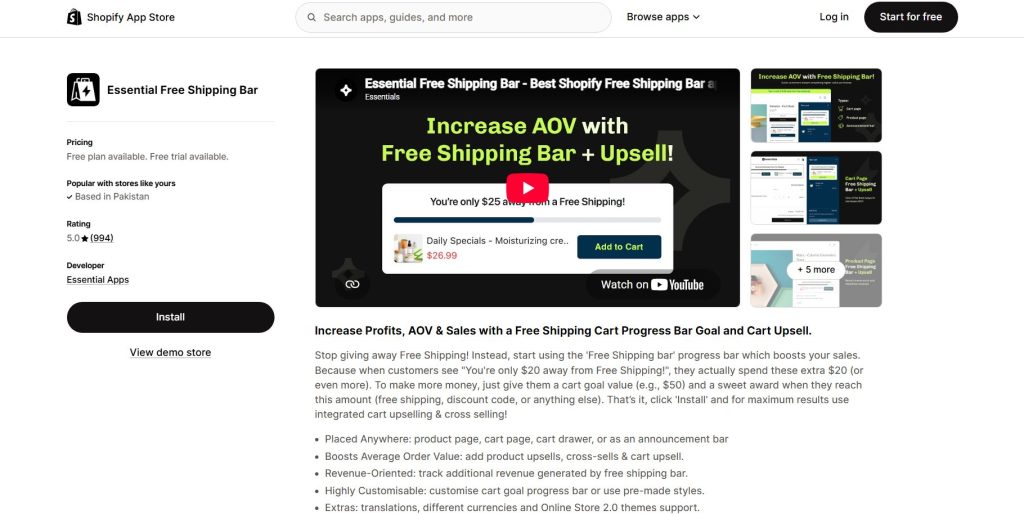
Essential Free Shipping Upsell helps merchants communicate a free-shipping target and encourage shoppers to spend more to qualify for the offer.
For example, suppose your store offers free shipping on orders above $75. A customer with $58 worth of products in their cart could see a message explaining that they need to add another $17 to qualify. The customer may decide to purchase a complementary item rather than pay the shipping fee.
The app can display free-shipping progress messages and related upsell features, depending on the configuration. These messages make the offer visible and help customers understand how much more they need to spend to receive the benefit.
This strategy can work well for clothing, beauty, home decor, accessories, and other product categories where customers may be interested in purchasing an additional item. It is also a simple way to connect a promotional incentive with a specific AOV goal.
However, you should calculate your shipping costs and product margins before setting a minimum order value. A free-shipping threshold should encourage larger orders without creating unnecessary losses for your business.
Best for:
Stores that want to increase cart totals by offering free shipping above a minimum spending amount.
7. BOGOS: Encourage Larger Purchases With Free Gifts
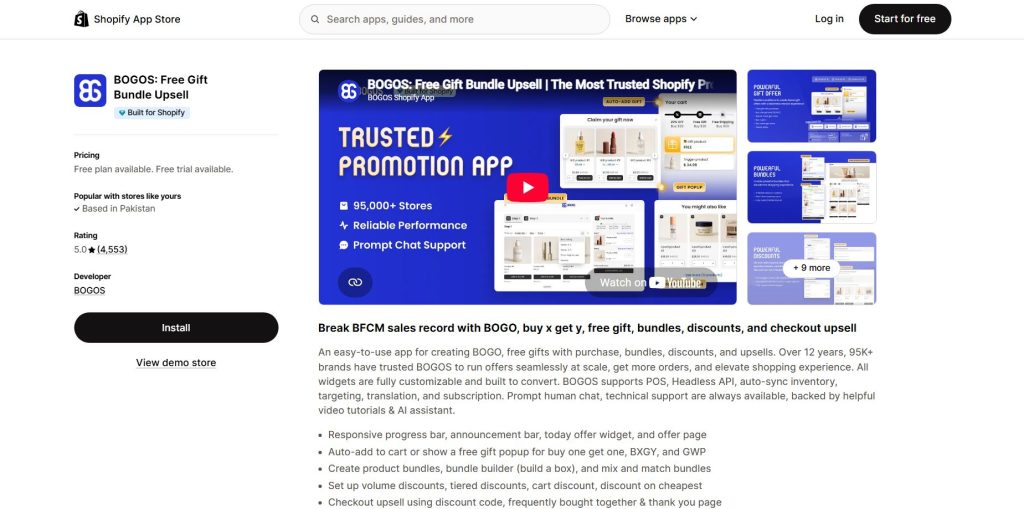
BOGOS helps Shopify merchants create promotions involving free gifts, buy-one-get-one offers, product bundles, and other purchase incentives.
Free-gift promotions can encourage customers to reach a minimum spending amount or purchase a particular product combination. Instead of offering a discount on every item, merchants can provide a gift that makes the overall deal more attractive.
For example, a beauty store might offer a complimentary travel-size moisturizer when customers spend $80 or more. A home decor store could offer a small decorative accessory with a qualifying purchase. Customers who are close to the spending target may decide to add another product to unlock the gift.
BOGOS can help merchants configure these promotions and present the offer to customers at relevant points in the shopping experience. Depending on the promotion, it can also support automatic gift additions and different offer conditions.
The most effective gifts are useful, relevant, and affordable for your business. Choose items that complement your main products and calculate the cost of the gift before launching the promotion.
Best for:
Stores that want to increase order value with free gifts, buy-one-get-one deals, and purchase-based rewards.
8. Shopify Search & Discovery: Recommend Relevant Products
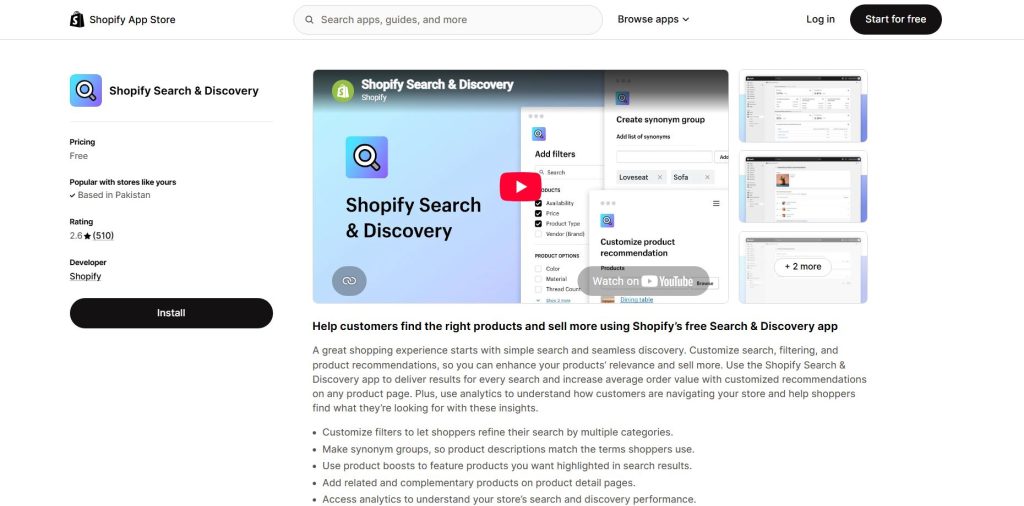
Shopify Search & Discovery is a free Shopify app that helps merchants improve product discovery through search, filters, product recommendations, and related product suggestions.
When customers can easily find products that match their needs, they are more likely to explore additional items. Relevant recommendations can introduce shoppers to complementary products they might not have considered when they first visited your store.
For example, a customer browsing a sofa could discover matching cushions, blankets, or side tables through related product recommendations. A customer looking at a skincare product could find other items designed to support the same routine.
The app gives merchants more control over how products are discovered and which related items are highlighted. This is especially helpful for stores with a large catalog, where customers may otherwise struggle to find useful combinations.
Because the app is free, it can be a practical starting point for businesses that want to improve product discovery before investing in more advanced upselling tools.
Best for: Shopify merchants who want to improve product discovery and recommend complementary products without adding another paid app.
How to Choose the Right Shopify App for Your Store
With so many apps available, choosing the right option depends on your products, customers, budget, and current sales performance. Rather than installing every app on the list, identify the main reason customers are placing smaller orders and select a tool that addresses that problem.
If customers usually purchase one product at a time, product bundles and cross-sell recommendations may be a good starting point. If shoppers abandon carts when shipping costs appear, a free-shipping progress bar could help communicate the benefits of reaching a spending threshold. Stores with strong order volume may also benefit from post-purchase offers that introduce complementary products after checkout.
It is equally important to consider your store’s design and performance. An app should work smoothly on mobile devices, match your branding, and avoid slowing down the shopping experience. Check its Shopify App Store listing, current pricing, available trial, customer reviews, and integration requirements before installing it.
You should also review how the app measures results. Some tools charge a fixed monthly fee, while others may base pricing on orders, revenue, or usage. Understanding these costs will help you decide whether the potential improvement in order value justifies the expense.
Best Practices for Increasing Average Order Value
Installing an app is only the first step. To improve results, you need a strategy that makes additional purchases valuable and convenient for your customers.
Recommend products that make sense together.
Choose complementary products based on how customers use them. A relevant recommendation is more helpful than a random offer.
Set a realistic free-shipping threshold.
Review your current AOV and profit margins before deciding how much customers should spend to qualify for free shipping. The target should encourage additional purchases without damaging profitability.
Create bundles that solve a problem.
Combine products that customers can use together, such as a skincare routine, a complete outfit, or a home office set. Explain why the combination offers value.
Keep promotions simple.
Customers should understand the offer, its conditions, and the benefits without reading complicated instructions. Clear messages make it easier for shoppers to make decisions.
Test different offers.
Compare product recommendations, bundle combinations, free gifts, and spending thresholds. Monitor which strategies increase order value while maintaining conversion rates and profit margins.
Measure performance regularly.
Track your AOV alongside total revenue, conversion rate, average discount, and profit. A higher average order value is useful, but it should not come at the cost of lower profitability or a poor customer experience.
Final Thoughts
Increasing average order value is about making every shopping experience more valuable for both your customers and your business. When shoppers discover useful complementary products, attractive bundles, and meaningful incentives, they have more reasons to add items to their carts. The right approach can help you increase revenue from existing traffic while creating a smoother and more satisfying buying experience.
Start by reviewing your current AOV and identifying where customers have opportunities to discover more products. Choose an app that solves your biggest challenge, test a few relevant offers, and measure the results before making further changes. With a clear strategy and consistent optimization, your Shopify store can encourage larger orders while maintaining customer trust and long-term profitability.
Join us as you begin your Shopify journey
We are e-commerce specialists and Shopify Partners. Get in touch with us if you need assistance with Shopify, need a whole website built, or have any other general questions.