
When customers visit your Shopify store, they notice its design before they explore your products. A clean layout, attractive product images, easy navigation, and a smooth shopping experience can encourage visitors to stay longer and discover what your business offers. However, a theme that works well for a clothing brand may not be the best choice for an electronics store or a business with a large product catalog.
Shopify offers themes with different layouts, features, and customization options. Some focus on visual storytelling, while others help merchants display many products, highlight promotions, or create a premium shopping experience. Choosing the right theme means understanding your products, your target audience, and the experience you want to provide.
In this guide, we will explore some of the best Shopify themes and explain what makes each one useful for different business needs.
Table of Content
- Why Your Shopify Theme Is More Important Than You Think
- 1. Dawn: A Simple Start for New Shopify Stores
- 2. Impulse: Turn Promotions Into Shopping Opportunities
- 3. Prestige: Create a Premium Brand Experience
- 4. Enterprise: Manage a Large Product Catalog
- 5. Motion: Bring Products to Life With Visual Storytelling
- 6. Focal: Make Product Discovery Easier
- How to Choose the Best Shopify Theme for Your Store
- Ways to Get Better Results From Your Shopify Theme
- Final Thoughts
Why Your Shopify Theme Is More Important Than You Think
Your theme is more than the visual design of your store. It helps shape the way customers discover products, understand your brand, and interact with your website. A suitable theme makes information easy to find and creates a consistent experience across different pages.
One important benefit is better product presentation. Clear images, organized collections, and well-designed product pages help shoppers understand what you sell. When customers can quickly find relevant products, they can spend more time comparing options and deciding what suits their needs.
Another consideration is mobile shopping. Many customers browse online stores on their phones, so your website should work smoothly on smaller screens. A responsive theme adjusts its layout to different devices, helping keep menus, images, text, and buttons accessible.
Your theme also influences how your brand is perceived. A luxury business may need an elegant layout, while a playful children’s brand might benefit from a colorful and friendly design. Choosing a theme that matches your brand personality helps create a consistent impression.
Performance is equally important. A theme with useful features and a well-organized layout can support a smooth experience, but large images, excessive animations, and poorly optimized apps may slow down your website. Store owners should consider the complete storefront rather than judging performance by theme design alone.
Ultimately, the best theme is one that supports your products, meets your customers’ expectations, and gives your business room to grow.
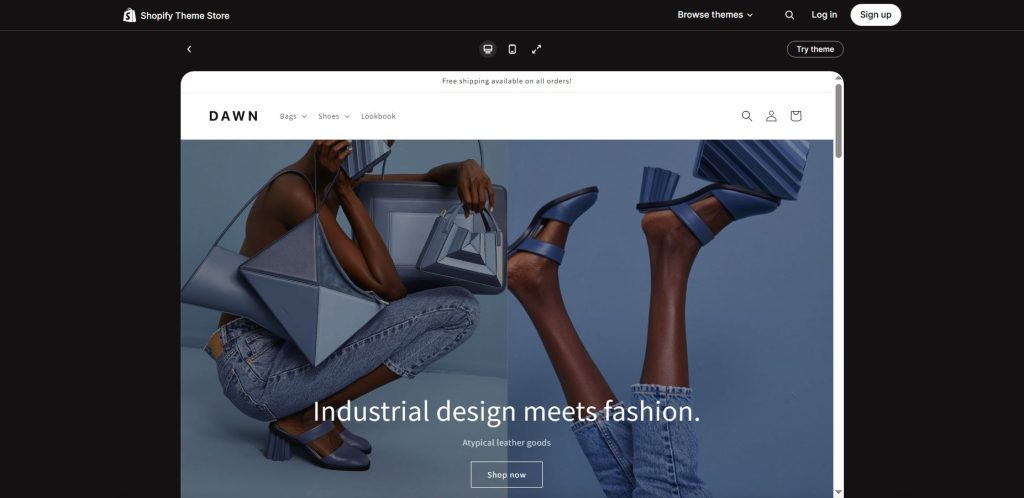
1. Dawn: A Simple Start for New Shopify Stores
Dawn is a good starting point for merchants who want a clean, modern, and easy-to-navigate store. Its simple design keeps the focus on product images, descriptions, and prices instead of unnecessary visual elements. This makes it suitable for businesses that want to create a professional storefront without making the design too complicated.
The theme includes flexible sections, product media support, and customization options that help store owners build pages according to their needs. It can work well for clothing, beauty products, home accessories, and other product categories. For new merchants, Dawn offers a practical way to establish an online presence while keeping the shopping experience straightforward.
Best for:
Beginners, small businesses, fashion stores, and product-focused brands.
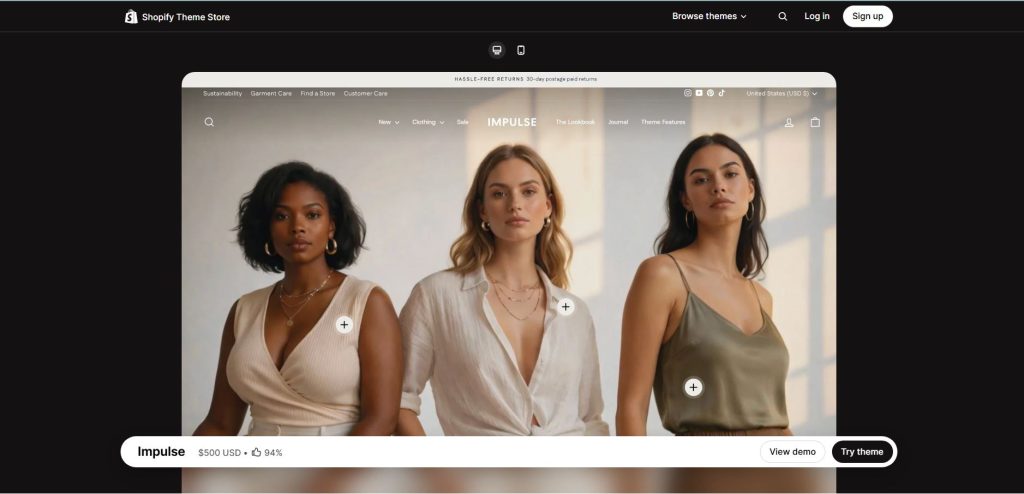
2. Impulse: Turn Promotions Into Shopping Opportunities
Impulse is designed for brands that want to highlight products, promotions, and seasonal campaigns. Its layout supports promotional banners, collection navigation, and product discovery, making it useful for stores that regularly introduce new products or run special offers.
Fashion brands, beauty businesses, and lifestyle stores can use Impulse to bring attention to featured collections and popular products. For example, a clothing store could create a dedicated section for its latest collection or promote a limited-time seasonal sale on the homepage. These features can make important products easier to find and help customers explore the store.
Best for:
Fashion brands, beauty stores, lifestyle businesses, and established retailers.
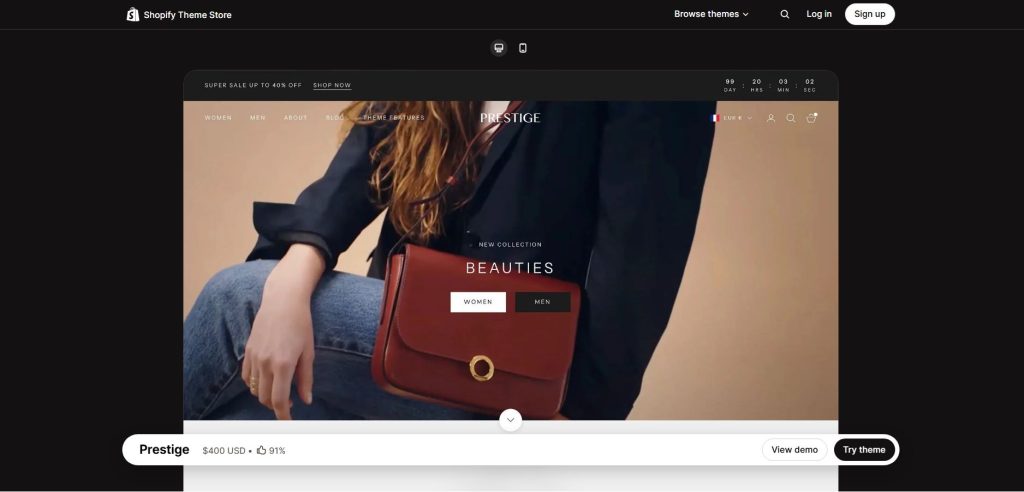
3. Prestige: Create a Premium Brand Experience
Prestige is a strong option for businesses that want their online store to feel elegant and high-end. Its design focuses on visual presentation, editorial-style sections, and brand storytelling. These elements can help merchants communicate the quality and identity of their products.
Luxury fashion labels, jewelry stores, skincare brands, and premium home decor businesses may find Prestige especially useful. Store owners can combine high-quality photography with detailed product descriptions to create a more polished shopping experience. This theme is particularly suitable for brands that want customers to understand the value and style behind their products.
Best for:
Luxury fashion, jewelry, skincare, cosmetics, and premium lifestyle products.
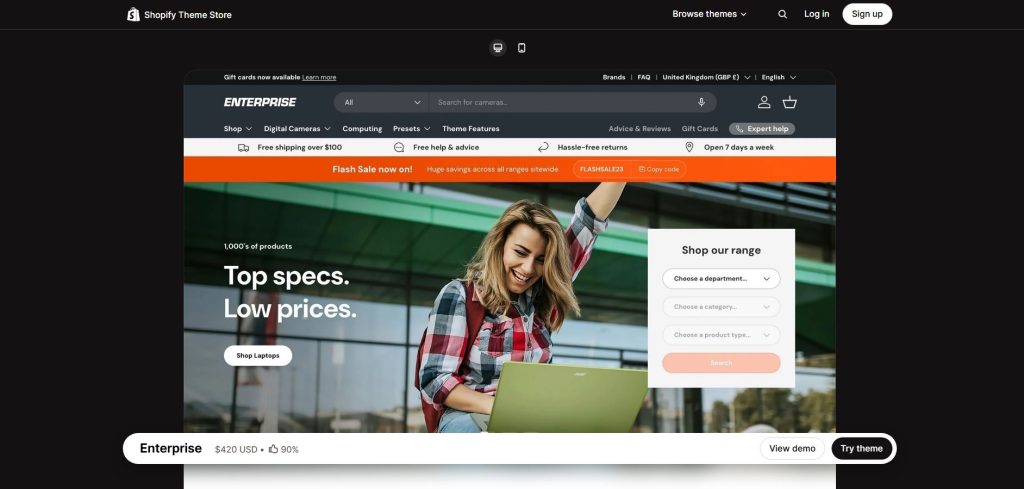
4. Enterprise: Manage a Large Product Catalog
Enterprise is a powerful Shopify theme designed for businesses that want to manage large product catalogs while providing a smooth and convenient shopping experience
As a Shopify business grows, organizing products becomes increasingly important. Enterprise is designed for stores that need a feature-rich layout and efficient product discovery. Its navigation and merchandising options can help customers explore different collections without feeling overwhelmed by a large catalog.
This theme may suit electronics retailers, fashion marketplaces, and stores that sell products across several categories. For example, an electronics store could organize laptops, accessories, headphones, and other items into clear collections. A well-structured layout helps shoppers locate relevant products more easily and supports a more convenient browsing experience.
Best for:
Large retailers, electronics stores, and businesses planning to scale.
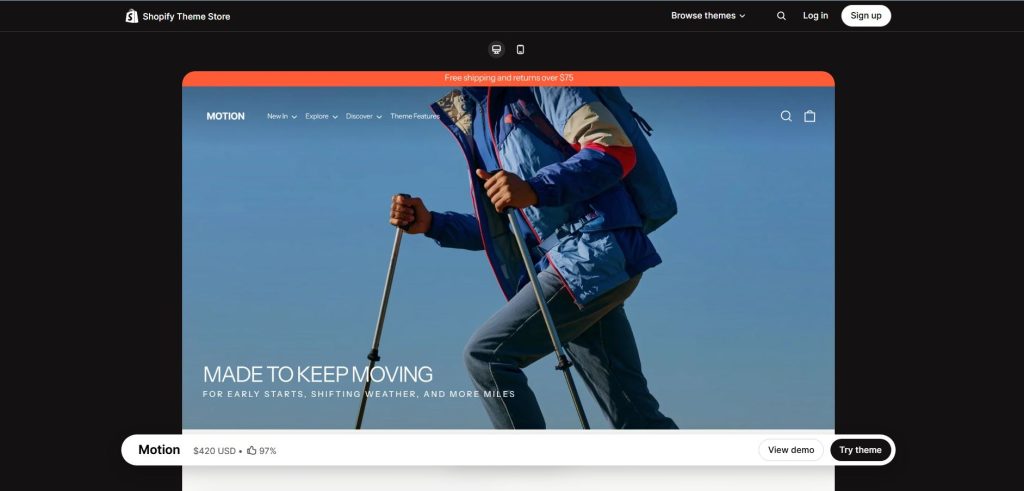
5. Motion: Bring Products to Life With Visual Storytelling
Motion is a suitable choice for brands that want their storefront to feel dynamic and visually engaging. It supports animations and video-based content that can help merchants showcase product details, demonstrate how items work, and create a stronger visual connection with visitors.
This theme can be useful for fashion, fitness, beauty, and lifestyle businesses where presentation plays an important role in purchasing decisions. A fitness brand, for example, could use video to demonstrate its products, while a fashion store could highlight how different outfits look in motion. These visual elements can make product pages more engaging when used thoughtfully.
Best for:
Fashion, beauty, sportswear, and lifestyle brands.
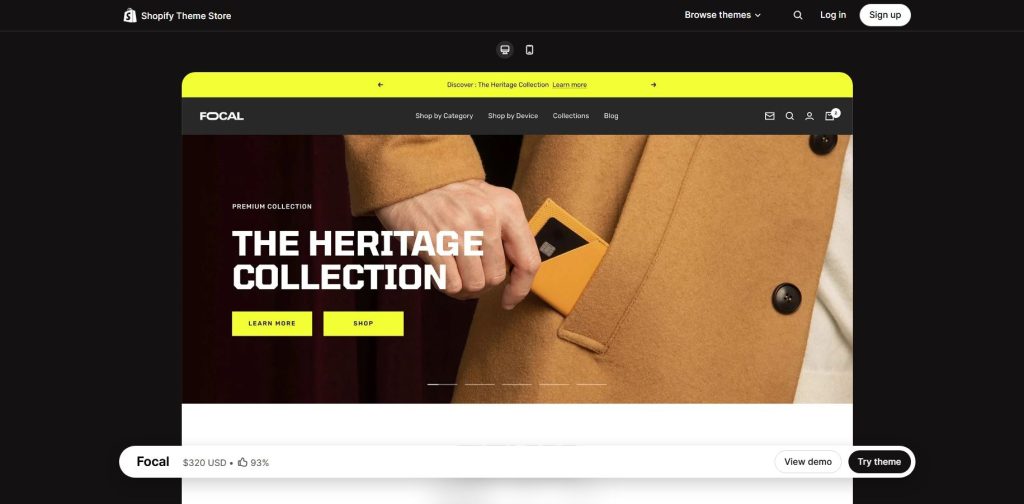
6. Focal: Make Product Discovery Easier
Focal offers a modern storefront design with a focus on product presentation and browsing. Its layout can help merchants display collections, highlight featured items, and create a consistent visual style across the store.
It may be a good fit for fashion, beauty, home decor, and lifestyle brands that want a balance between attractive design and practical navigation. Store owners can use collection sections and product imagery to guide visitors toward relevant items. This is particularly useful when customers need to compare products or browse several categories before making a decision
Best for:
Home decor, fashion, beauty, and lifestyle stores.
How to Choose the Best Shopify Theme for Your Store
With several strong options available, the best way to choose a theme is to compare each one with your business requirements. A theme that works well for another store may not necessarily be the right choice for yours.
Understand Your Customers and Products
Start by thinking about what you sell and how customers shop for it. A clothing store may need image-focused collections, while an electronics business may require detailed specifications and product filters. A handmade brand may prioritize storytelling, and a skincare store may need space for ingredients and usage information.
Your theme should support the way customers explore and compare products. When the layout matches their needs, shopping becomes more straightforward.
Choose Between Free and Premium Themes
Free themes such as Dawn, Craft, Refresh, Sense, and Studio can provide a strong foundation for many businesses. They are especially useful when you want to launch a store without increasing your initial expenses.
Premium themes such as Impulse, Prestige, Enterprise, Motion, and Focal may offer additional design options or specialized merchandising features. However, paying for a theme does not automatically guarantee better results.
Review the current features, test the demo, and compare the available options before purchasing. Choose a premium theme only when its features provide value for your specific business.
Check Mobile Responsiveness
Your store should work well on smartphones and desktop computers. Review the mobile version of each theme and make sure product images, text, menus, and buttons remain easy to use.
Try browsing product collections and opening individual product pages. If important information is difficult to find on a smaller screen, you may need a different theme or additional customization.
Review Customization Options
Every brand has its own identity. Your theme should allow you to adjust supported design elements such as colors, typography, homepage sections, and product layouts.
If you need special features, check whether they are built into the theme or require a compatible app. Understanding these requirements early can help you avoid unexpected costs.
Consider Performance and Future Growth
A good theme should support a smooth shopping experience without unnecessary complexity. Review the demo on different devices and remember that apps, images, and custom code can affect overall store performance.
You should also think about your future plans. If you expect to add many products or expand into new categories, choose a theme that can support your planned catalog and navigation structure.
Ways to Get Better Results From Your Shopify Theme
Once you have selected your theme, focus on making it useful for your customers. A well-customized store should make it easy for visitors to understand your brand, explore products, and complete their purchases.
Start by creating a clear homepage. Introduce your brand, feature important collections, highlight selected products, and guide visitors toward relevant pages. Avoid adding too many sections simply because they are available.
Next, improve your product pages. Use clear images, informative descriptions, and accurate product details. Make prices, sizes, colors, and other available options easy to understand. Include relevant shipping and return information so customers know what to expect.
Organize your navigation around the way customers shop. Use straightforward menu labels and create meaningful collections. If you have a large catalog, suitable filtering and sorting tools can help visitors narrow their choices.
You can also improve the shopping journey by reviewing how customers add products to their carts. Convenient shopping tools may reduce unnecessary steps and make product selection easier. For example, WizeSaaS Quick Buy Button offers a solution that store owners can explore for adding convenient purchasing options to their Shopify storefronts.
Before installing any app, review its features and theme compatibility. Test how it behaves on mobile and desktop, and check whether it adds unnecessary complexity to the shopping experience.
Finally, test your store regularly. Check navigation links, product options, cart behavior, and the journey toward checkout. Ask someone who has never visited your store to find a product and explain any difficulties they experience. Their feedback can help you identify improvements you may have missed.
Remember that a theme provides the foundation, but your content, product presentation, and store management bring the experience together.
Final Thoughts
The best Shopify theme is not necessarily the one with the most features or the most impressive design. It is the one that fits your business, supports your products, and helps customers shop comfortably.
Dawn is a flexible starting point for new businesses, Impulse supports promotional merchandising, and Prestige offers an elegant approach to brand storytelling. Enterprise can suit larger catalogs, while Motion and Focal provide additional options for visual presentation and product discovery. Craft, Refresh, Sense, and Studio offer free alternatives for businesses with different needs.
Before choosing a theme, consider your budget, customers, product range, and plans for growth. Test the available demos and focus on the features you will genuinely use. Once your theme is in place, invest time in quality images, clear descriptions, simple navigation, and a smooth mobile experience.
A well-chosen theme can help you build a professional and user-friendly Shopify store. When you combine the right design with useful content and a thoughtful shopping experience, you create a stronger foundation for your business to grow.
Join us as you begin your Shopify journey
We are e-commerce specialists and Shopify Partners. Get in touch with us if you need assistance with Shopify, need a whole website built, or have any other general questions.