
With the print-on-demand (POD) business model, you don’t need to maintain any inventory. Instead, you produce designs and market them on your website. When a consumer places an order, your POD provider prints the item on demand and sends it right away.
Up until 2030, the print-on-demand (POD) market is expected to grow at a compound annual growth rate (CAGR) of 26.1%.
Print-on-demand services make it simpler to avoid the time, expense, and risk involved in keeping inventory and enable you to produce customised goods at a lower price than would be necessary if you were to manufacture them yourself.
This guide will provide you an overview of the print-on-demand industry and offer advice on how to launch your own print-on-demand company as well as the best way to begin selling customised goods.
In this blog post, You may learn how to start up a print-on-demand business on Shopify. The following subjects will be covered:
Table of Content
- What is print on demand
- The best print-on-demand services for designing unique products
- Developing designs without having a designer
- The pros and cons of print on demand for your online store
- Where to search for designers and design ideas
- Create, check, sell & grow
- FAQ of print on demand
What is print on demand?
Print on demand (POD) is a fantastic method to launch an internet business with no initial outlay. Custom goods with your own designs can be made and sold on your website or through an online store like Etsy or Amazon.
With the print-on-demand (POD) business model, you are not required to maintain any inventory. Instead, you only print and distribute things when a consumer placed an order; you do this by working with a third-party provider. As a result, you won’t have to worry about managing inventory, storing things, or handling returns.
The best print-on-demand services for designing unique products
Even while a lot of print-on-demand services could appear to be quite similar at first sight, you’ll need to carefully examine which ones you use depending on your intended products, the location to which you’ll send them, and the retail pricing you want to charge, among other things. The number of print-on-demand businesses in the market has increased along with the popularity of the practise.
For example, When you consider that your most economical shipping option will take 21 business days to reach clients, a product with a low base cost can seem like a logical decision.
It’s important for doing comprehensive searches while assessing print on demand businesses. Your friends are Google and other review websites. Selecting the incorrect print on demand company could lose your money and possibly stop the expansion of your business.
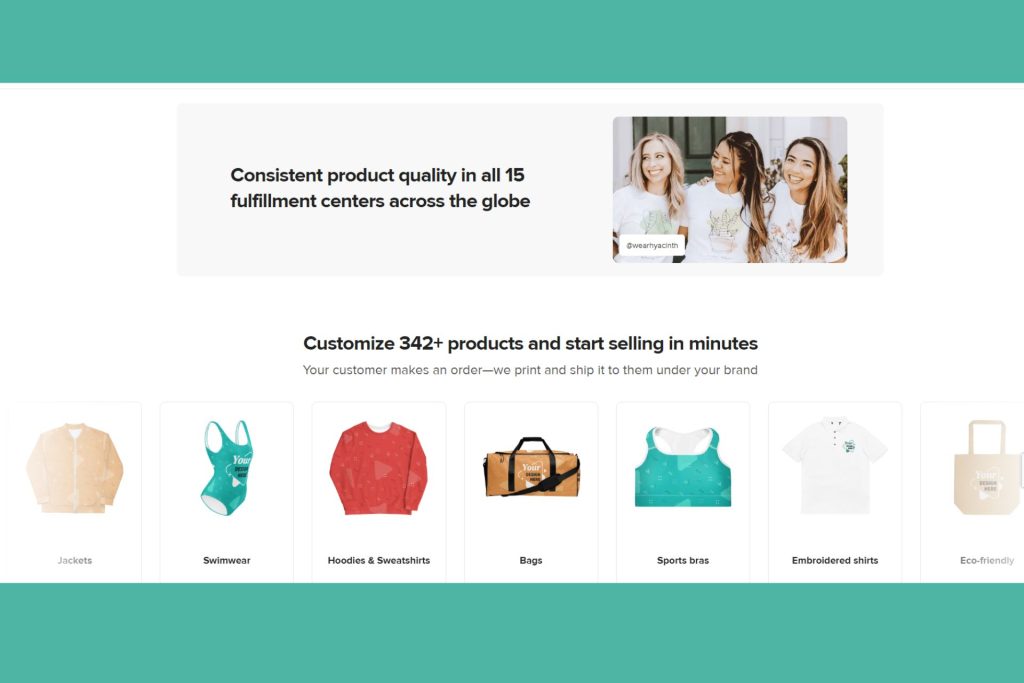
1. Printful
- Direct to Garment printing is great for simpler designs (like humorous t-shirts), as it prints directly into garments. As a result, only specific sections of the product can be printed on.
- Cut and Sew Sometimes referred to as “all-over print.” To ensure a flawless print throughout the entire piece, the clothing item is cut, printed on, and then placed back together. The base costs might be higher, but you can produce a more expensive, premium product as a result. Contrast this with “sublimation printing,” a less precise but more affordable technique for getting an all-over print.
2. Lulu Direct
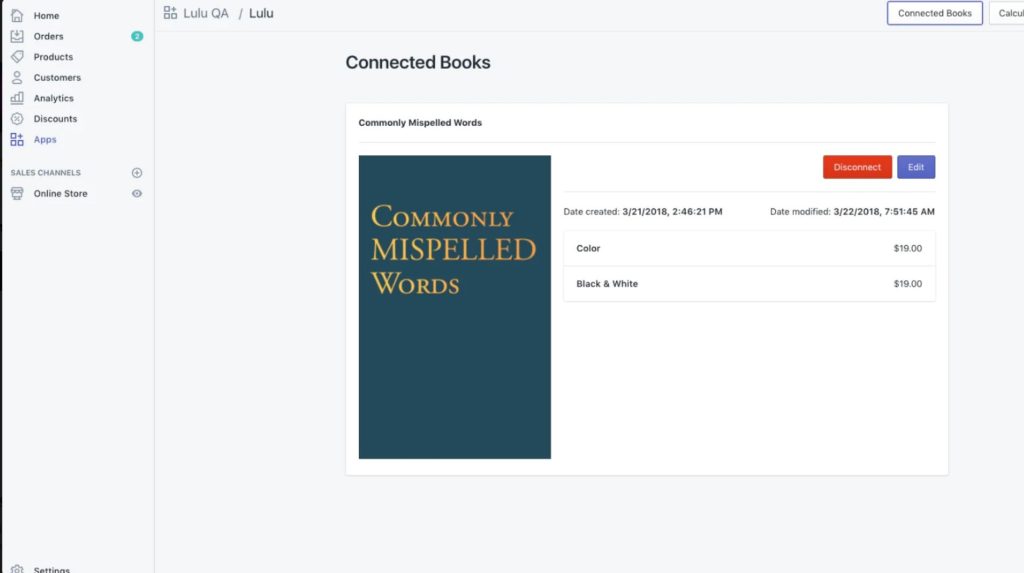
For printing and distributing your own books and ebooks, Lulu is a self-publishing platform that provides many of the tools you’ll need. One of the most well-known print-on-demand businesses.
With Lulu Direct, its print-on-demand service, you may create your own book product by selecting from a variety of book sizes, binding options, and page/print quality options.
Although Lulu Xpress doesn’t have a built-in editor, it does provide free templates to help you get started. To assist you estimate the cost of your job, it even features a transparent pricing calculator that includes different shipping alternatives.
Additionally, there are savings offered if you want to place a large order.
3. Gooten
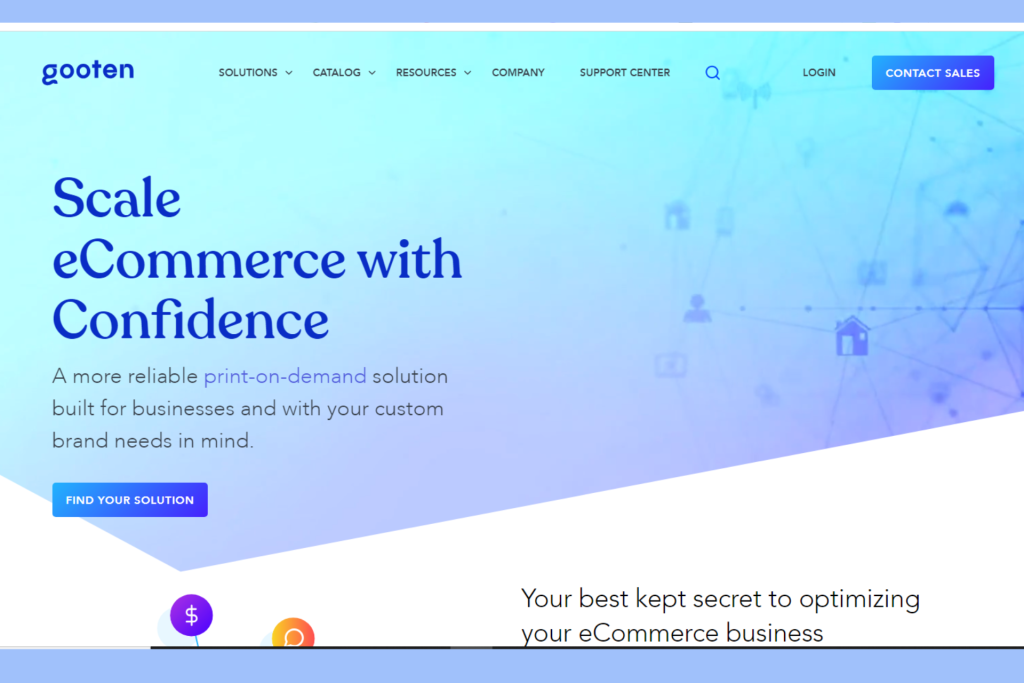
Gooten offers a large selection of customizable products, including some that are exclusive to the company, including calendars and dog beds.
However, there is also a lot more variation among Gooten’s products in terms of print quality and shipping because it uses an international network of vendors and dropshippers to print its products. However, it also means that the cost of the product and the shipping will probably go down.
With Gooten’s user-friendly image editor, you can get a decent idea of how your finished work will appear.
4. Printify
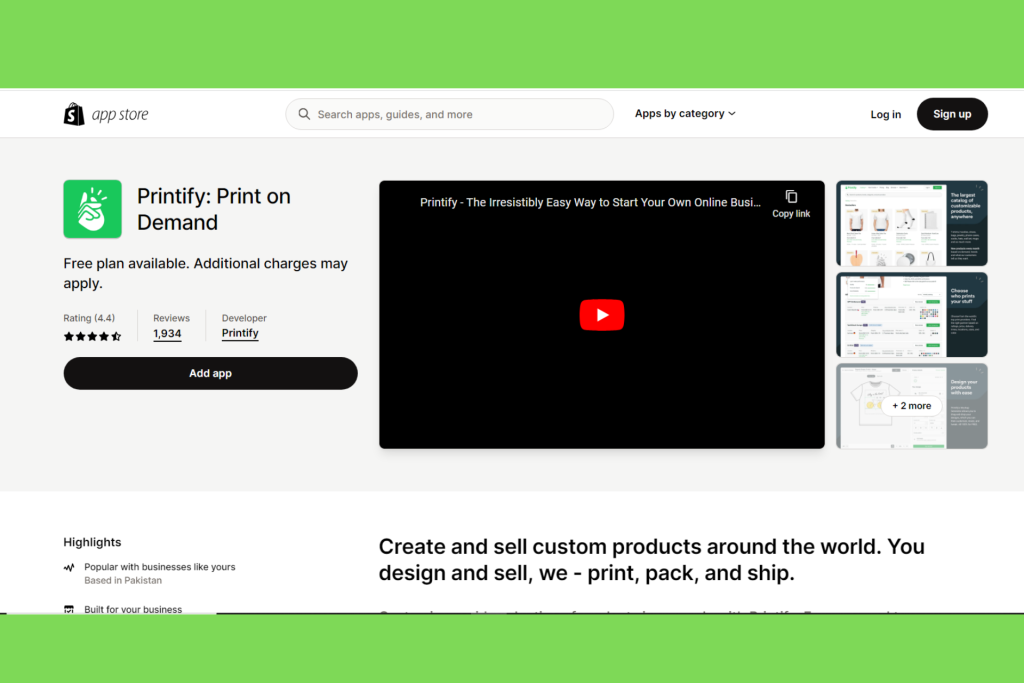
Printify : Another print-on-demand provider that offers the typical selection of t-shirts and hoodies is Printify. What makes Printify interesting is that it also provides a global vendor network, enabling a variety of distinctive white-label products you’re not likely to find anywhere else, such jewellery, watches, shoes, and water bottles. In reality, the platform offers more than 200 items for printing.
While using Printify is free, a premium subscription is available for $29 per month that grants you 20% discount of all items. This is a good choice if you plan to expand in the future and increase your profit margins.
Developing designs without having a designer
In order to produce successful print-on-demand items, design is essential. But to find innovative designs, you don’t have to be a full-time designer. In fact, according to recent surveys, 32% or less of business owners outsource their store’s designs.
As long as you comprehend a few fundamental ideas that will enable you to collaborate with designers effectively, there are numerous strategies to commission or create your own designs.
The first and most crucial step is to get your design file ready. You should make it clear to designers that your design is intended for printing. This suggests that a resolution of 300 dots per inch (dpi) should be used when saving the file. The images you supply should have the same dimensions as the product’s printing area.
Be aware that the print specs will vary based on the printing method employed. If in doubt, simply provide the designer the print specifications for the particular product so they are aware of the situation.
The file you upload will often be a PNG or PSD. Remember that the colour of the t-shirt will serve as your background colour if you pick a transparent background.
Where to search for designers and design ideas
In the ideal situation, you are a designer yourself or know one with whom you get along well. But if you lack access to design abilities, don’t give up. That is the purpose of outsourcing.
If you give specific guidelines, you can find designers to work with on Behance or 99designs who can create usable designs. Here’s how to give a design project more context and clarity:
- Share knowledge about your audience. Tell them who your target audience is and what it’s for. A website demonstration can be helpful.
- Directly explain what you expect. Use your initial pitch and any following changes (you should receive at least one or two) to be really clear about what you want and try to offer specific criticism at each stage.
- Provide motivational examples. Give them a model to work from or mention some earlier work you enjoyed.
You should be able to discover a great designer to realise your idea because there are plenty of them. Choosing what you want to design in the first place is the really difficult part.
You should be able to discover a great designer to realise your idea because there are a lot of them. Choosing what you want to design in the first place is the really difficult part.
This will depend on who the product is meant for, but you can receive design ideas from:
The pros and cons of print on demand for your online store
The dropshipping business model, in which the products and delivery are all handled by a third party, can be built using print on demand. It’s one of the easiest methods to find things or launch an online business, but you should be aware of the benefits and restrictions before you get started.
Pros
- Quickly produce items: Once you have the design, you can quickly produce the item and start selling it.
- Order shipping is taken care of: You take over control of shipping and fulfilment to your provider. You are only in charge of providing customer support after the sale.
- Low risk, low investment: Since you don’t actually have any inventory, it’s simpler to add or delete items, try out concepts, or change your strategy.
Cons
- Reduced margins: Your costs per item will obviously be more than if you were to buy in bulk.
- Lesser limits on shipping: Given that different print-on-demand products may have different shipping costs, things might get confusing. You have few options if you want to design a unique unboxing experience.
- Limited products: Depending on the seller and the product, you may be able to customise things. You’ll need to consider base costs, customisation possibilities, and available sizes when determining which print on demand businesses you want to deal with.
Guidelines for getting started with print on demand
Here are some of the most useful print on demand advice.
1. Get samples every time
When selling products online using print-on-demand services, it is crucial to ensure the quality of the products.
Being your own consumer allows you to personally experience what it’s like to get your items, which is the best approach to ensure that the physical thing you create looks and feels exactly as you intended. If a sample discount of up to 20% off or free shipping is offered by a provider, like Printful, be sure to take advantage of it.
2. Plan your shipping well.
Even if you don’t ship the products directly, shipping still presents considerable complication in terms of shipping prices and timings, as well as how to manage consumer expectations. The top print-on-demand businesses will be open and honest about shipping and take the initiative to alert customers of any potential delays.
3. Make mockups of your products to display.
Mockups work well as an alternative to actual products and will be clearly visible on your product pages. Models can help you take engaging images of your products.
Several print-on-demand businesses can assist you in making your own mockups that display your products as a flatlay or on a human. However, there are a lot of free mockup templates and other services that can potentially make your products come to life.
4. Establish a niche and an audience.
With print-on-demand products, your margins will be a little narrower, so you’ll want to position your brand strategically. Because your targeting will be considerably more accurate, having a well defined demographic (such as dog owners) might actually help you reduce your client acquisition expenses and increase your potential earnings.
A niche makes it simpler to build an audience that can be used as a resource. You can start using the following marketing strategies right away:
- Create or curate content for your target audience using your Instagram account.
- For a start, spend $10 on Facebook advertisements to test your products with your target audience.
- In order to continue marketing to visitors for free, collect their email addresses.
- Building a long-lasting business, whether it be print on demand or not, requires expanding an audience.
Create, check,sell, and grow
For young business owners or for anyone who simply wants to test a concept before investing in it, print-on-demand services provide an accessible starting point. There are countless white label items available that you may customise, and there are countless design options to go along with them.
It’s inevitable that certain combinations may perform better than others, but it’s pretty simple to use the same basic design across several items.
You may always move from print on demand to stocking your own inventory if your business plan succeeds and you begin to make a significant amount of sales, or you can keep using these services while looking for new strategies to expand your customer base.
FAQ about print-on-demand
1. How should print on demand be used?
Selecting a niche and the products you want to sell is the first step in launching a print on demand business. After that, prepare your designs and website. Then, choose a print-on-demand service and incorporate the products into your store to begin selling them. Orders will start coming in once you start promoting your website, and your print provider will handle fulfilment. Get started!
2. Is print-on-demand a free service?
With print on demand, you can sell a variety of goods. T-shirts, caps, mugs, wall prints and posters, drawstring and cloth bags, hoodies, towels, phone covers, notebooks, cushion covers, sweatshirts, and leggings are a few of the popular print-on-demand products. Print on demand is technically free, but to start seeing results, you’ll probably need to spend some cash on marketing and advertising. Get started with free!
3. What kind of profits can you expect from print on demand?
Your print-on-demand business’s profitability is influenced by the target market, their demands, product demand, and seasonality. You must take into account the sale price, costs charged by your print provider, and the quantity of orders when calculating your earning potential. Print on demand enables you to sell goods with no risk.
Join us as you begin your Shopify journey
We are e-commerce specialists and Shopify Partners. Get in touch with us if you need assistance with Shopify, need a whole website built, or have any other general questions.